Mold Testing Winnipeg – Professional Mold Inspection, Detection & Air Quality Assessment
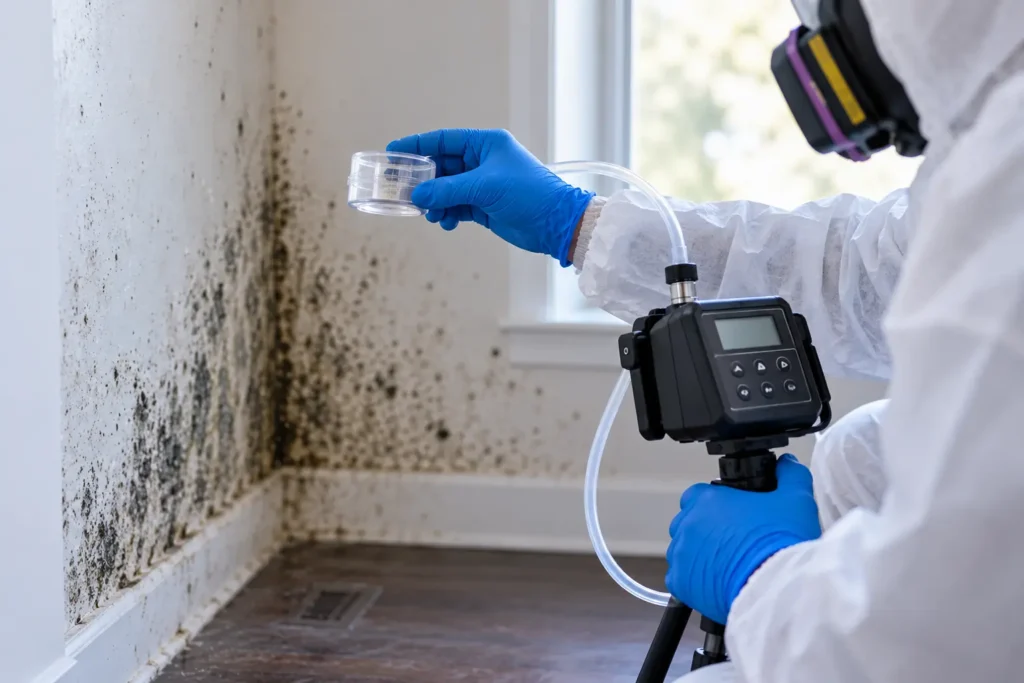
Concerned about mold in your home or commercial property? Whether you’ve noticed a persistent musty smell, discovered black spots on your walls, or experienced water damage, a professional mold assessment can help identify moisture problems and determine whether further investigation or remediation is necessary.
Mold testing in Winnipeg can involve visual inspections, moisture assessments, air sampling, surface testing, and laboratory analysis, depending on the condition of the property and the purpose of the investigation.
Mold is commonly found in damp environments, including basements, bathrooms, attics, kitchens, crawl spaces, and concealed wall cavities. While some contamination is visible, moisture problems can also develop behind drywall, beneath flooring, or inside poorly ventilated building assemblies.
At Assured Builders, we help Winnipeg homeowners, landlords, property managers, and commercial property owners understand mold-related building damage and the restoration work that may be required.
Where professional mold testing or independent environmental assessment is necessary, the appropriate qualified testing provider can help establish the extent of the investigation before remediation and reconstruction.
Call Assured Builders at 431-293-0168 to discuss suspected mold damage, inspection requirements, and restoration options in Winnipeg.
What Is Professional Mold Testing?
Professional mold testing involves collecting and analyzing samples to investigate specific mold-related concerns within a property.
Testing may include airborne particles, surface deposits, or samples of suspect materials.
Depending on the situation, a qualified assessor may recommend laboratory analysis to help characterize the material collected.
However, mold testing is not always necessary.
When visible mold and moisture damage are already present, identifying the moisture source and addressing contaminated materials may be more important than determining the exact mold species.
A comprehensive mold assessment should consider the building’s moisture conditions, history of water damage, and visible signs of contamination.
Mold Inspection and Testing Winnipeg
Mold inspection and mold testing are related but different services.
A mold inspection focuses on examining the property for visible contamination, moisture problems, and conditions that may support mold growth.
Mold testing involves collecting samples for analysis when there is a specific reason to do so.
What Does a Mold Inspection Include?
Depending on the property and inspection scope, an assessment may involve:
Examining accessible walls and ceilings
Checking for visible mold growth
Investigating water stains
Reviewing previous flooding or leaks
Measuring moisture in building materials
Evaluating indoor humidity
Inspecting accessible attics and basements
Examining areas around plumbing fixtures
Identifying potential ventilation problems
Recommending further investigation where appropriate
A visual inspection cannot establish the condition of every concealed cavity.
Where hidden moisture damage is suspected, additional investigation may be necessary.
Signs You May Need Mold Testing or Inspection
Mold problems are not always immediately visible.
In some properties, the first indication is a recurring musty odour or unexplained moisture damage.
Common warning signs include:
Black, green, grey, or white spots on walls
Persistent musty smells
Peeling or bubbling paint
Soft or swollen drywall
Water stains on ceilings
Damp basement walls
Recurring condensation
Mold around windows
Moisture beneath kitchen cabinets
Previous flooding
Wet insulation
Visible contamination in attic spaces
These signs may justify a professional assessment, although they do not automatically mean laboratory testing is required.
Residential Mold Testing Winnipeg
Residential mold testing may be considered when homeowners need additional information about suspected contamination or moisture-related building conditions.
Different homes require different assessment approaches.
A localized concern in one bathroom may need a relatively simple inspection, while a house with recurring flooding and concealed water damage may require a more detailed investigation.
Home Mold Inspection
A home mold inspection may evaluate accessible areas where moisture commonly accumulates.
These can include basements, bathrooms, kitchens, attics, crawl spaces, and exterior walls.
Testing for Mold in Your House
Testing may be recommended when it will help answer a specific question that cannot be resolved through inspection alone.
For example, an assessor may collect a surface sample to characterize an uncertain deposit.
Testing should not replace investigating leaks, condensation, or other moisture problems.
Mold Air Testing Winnipeg
Mold air testing involves collecting airborne particles for laboratory analysis.
It is sometimes used during indoor environmental investigations when the assessor has a specific sampling objective.
How Does a Mold Air Test Work?
Depending on the method, an air sampling device draws a measured volume of air through a collection medium.
The sample is then analyzed by a laboratory.
The results may provide information about particles collected at the time and location of sampling.
What Can Mold Air Testing Tell You?
Air sampling can provide information about airborne fungal particles under the conditions present during the test.
However, results may be affected by:
Outdoor mold levels
Open windows and doors
Ventilation systems
Weather conditions
Occupant activity
Sampling location
Time of sampling
A single air test cannot reliably determine all mold conditions throughout a building.
Is Air Testing Always Necessary?
No.
When visible mold and moisture damage are already present, air testing may not change the corrective action required.
An appropriately qualified assessor should explain why sampling is recommended and how the results will be interpreted.
Indoor Air Quality Testing for Mold
Indoor air quality testing may form part of a broader environmental assessment.
However, mold testing is only one possible component of an indoor air quality investigation.
Indoor environmental conditions can also be affected by ventilation, humidity, combustion sources, particulate matter, and other contaminants.
When Is Mold-Related Air Quality Testing Considered?
Testing may be considered when:
An environmental consultant identifies a specific sampling need
Documentation is required for a defined purpose
The investigation involves uncertain conditions
Sampling will influence a remediation decision
An independent assessment calls for laboratory analysis
There is no single air test that can guarantee a home is completely free of mold.
The most useful assessment combines appropriate inspection findings with a clear understanding of moisture conditions.
Black Mold Testing Winnipeg
Black mold testing is a common concern among homeowners who discover dark staining on drywall, bathroom ceilings, attic plywood, or basement walls.
However, mold colour alone cannot reliably identify the species.
Many different molds can appear black or dark green.
How Do You Test for Black Mold?
A qualified assessor may collect a sample of suspected growth when laboratory identification is warranted.
Depending on the investigation, sampling may involve a tape lift, swab, or material sample.
Is Black Mold More Dangerous Than Other Mold?
The appearance of mold does not reliably establish its health risk.
Exposure to damp and moldy environments may contribute to respiratory symptoms, allergies, or asthma-related problems in susceptible individuals.
Visible mold should be addressed appropriately regardless of its colour.
Do You Need Black Mold Testing Before Removal?
Not always.
If visible contamination and water damage are present, appropriate remediation and moisture correction may be necessary regardless of the species identified.
Testing should be selected based on whether it will materially influence the assessment or remediation plan.
Mold Detection Services Winnipeg
Mold detection involves identifying conditions that may indicate microbial growth or concealed moisture damage.
Because mold often develops in damp materials, moisture investigation is an important part of the assessment process.
Moisture Meters
Moisture meters can help identify elevated moisture levels in certain building materials.
However, a moisture meter does not directly identify mold.
Thermal Imaging
Thermal imaging may help identify temperature differences that warrant further investigation.
These differences can sometimes be associated with moisture, insulation deficiencies, or air leakage.
A thermal camera does not directly detect mold.
Humidity Measurements
Indoor humidity measurements can help evaluate conditions that may contribute to condensation.
Visual Inspection
Visible staining, deterioration, and moisture damage can provide important clues about building conditions.
Laboratory Sampling
Samples may be analyzed when additional information is necessary.
No single tool can reliably identify every concealed mold problem without considering the surrounding building conditions.
Mold Testing Inside Walls
Mold can develop inside wall cavities following plumbing leaks, condensation, flooding, or exterior water intrusion.
Concealed contamination may not be visible from the room.
Signs of Possible Mold Inside Walls
Potential indicators include:
Persistent musty odours
Soft drywall
Recurring water stains
Peeling paint
Moisture around baseboards
Previous plumbing leaks
Damp insulation
Discoloration around wall openings
These symptoms do not automatically confirm concealed mold.
How Is Hidden Mold Investigated?
A qualified assessor may use moisture measurements, building history, visual observations, and targeted investigation.
Opening a wall may sometimes be necessary to evaluate concealed materials.
Unnecessary destructive investigation should be avoided.
Basement Mold Inspection Winnipeg
Basements are among the most common areas where Winnipeg homeowners experience moisture-related problems.
Foundation seepage, flooding, plumbing leaks, and condensation can affect finished basement materials.
Common Basement Mold Concerns
An assessment may investigate:
Mold on basement drywall
Damp foundation walls
Water-damaged insulation
Moisture behind finished walls
Musty odours
Wet flooring
Previous flooding
Recurring water stains
If extensive contamination or damaged materials are present, remediation and restoration may be necessary.
Laboratory testing is not automatically required when visible mold and moisture damage have already been identified.
Attic Mold Inspection and Testing
Attic mold may develop when warm, humid indoor air enters a cold attic space and condenses on roof sheathing or other surfaces.
This can be particularly relevant during Winnipeg’s freezing winters.
Common Attic Mold Problems
Potential causes include:
Inadequate attic ventilation
Air leakage from living spaces
Bathroom exhaust ducts terminating in the attic
Roof leaks
Missing insulation
Condensation on roof sheathing
Frost accumulation
An attic assessment may focus on visible staining, moisture conditions, ventilation, and building defects.
Testing may be considered when there is a specific reason to characterize suspect material.
Bathroom and Kitchen Mold Testing
Bathrooms and kitchens contain several sources of moisture, including plumbing fixtures, appliances, and humidity from daily activities.
Bathroom Mold Inspection
Common areas of concern include:
Shower walls
Bathroom ceilings
Bathtub surrounds
Sink cabinets
Drywall behind fixtures
Exhaust ventilation
Kitchen Mold Inspection
Potential problem areas include:
Under kitchen sinks
Behind dishwashers
Refrigerator water lines
Cabinet backing
Flooring beneath appliances
Plumbing connections
Where mold is visibly present on damaged building materials, the priority is usually correcting moisture and determining the appropriate remediation scope.
Mold Inspection for Apartments and Rental Properties
Tenants and landlords may request mold inspections when moisture problems affect rental units.
Common apartment concerns include mold around windows, bathroom condensation, plumbing leaks, and water damage from neighbouring units.
Mold Inspection for Renters
If you suspect mold in your rental unit, document visible damage and notify the landlord or property manager.
Photographs, dates, and descriptions of recurring moisture problems can help establish a record.
Mold Testing in Apartments
Testing may be appropriate when it serves a defined assessment purpose.
However, visible contamination and moisture damage should not be ignored while waiting for laboratory results.
In Manitoba, rental property maintenance concerns may involve responsibilities under residential tenancy rules.
For questions about tenancy obligations or disputes, contact Manitoba’s Residential Tenancies Branch.
Commercial Mold Testing Winnipeg
Commercial properties may require environmental assessment when moisture damage affects offices, retail spaces, warehouses, rental buildings, or other occupied areas.
Potential concerns include:
Roof leaks
Plumbing failures
Flooding
Damp drywall
HVAC-related moisture
Concealed wall damage
Extensive condensation
Larger commercial investigations may require specialized environmental consultants, detailed reporting, and coordination with property management.
The assessment scope should reflect the building conditions and purpose of the investigation.
HVAC Mold Inspection
Heating, ventilation, and air-conditioning systems can develop moisture problems under certain conditions.
However, dust or dark deposits around air vents do not automatically indicate mold contamination.
Common HVAC Moisture Concerns
Potential issues include:
Condensation inside equipment
Drainage problems
Wet insulation
Water-damaged duct materials
Moisture around cooling components
Poorly maintained condensate systems
A qualified HVAC professional or environmental assessor may be needed to evaluate suspected contamination.
Avoid unnecessary disturbance of contaminated duct materials.
ERMI Mold Testing Winnipeg
ERMI stands for Environmental Relative Moldiness Index.
It is a research-based method developed to compare certain fungal DNA measurements in settled dust samples.
What Is an ERMI Test?
ERMI uses laboratory analysis of dust samples to calculate an index based on selected mold species.
Is ERMI Recommended for Home Mold Inspection?
ERMI was developed as a research tool and is not a universal standard for determining whether a home is safe or requires remediation.
An ERMI result should not be treated as a definitive diagnosis of building conditions or health risk.
For routine property concerns, visual inspection, moisture investigation, and targeted assessment are generally more directly relevant.
If an ERMI test is being considered, ask the assessor what question it will answer and how the result will affect the remediation decision.
At-Home Mold Tests vs. Professional Mold Testing
Home mold testing kits are available through hardware stores and online retailers.
However, their usefulness can be limited.
Mold spores are naturally present in indoor and outdoor environments.
A test that detects mold does not automatically establish that a building has abnormal contamination or that remediation is required.
Limitations of DIY Mold Tests
At-home kits may not identify:
The source of moisture
Concealed contamination
The extent of damaged materials
Whether remediation is necessary
The appropriate repair method
Some kits also require laboratory analysis that is not included in the initial purchase price.
Why Professional Assessment Can Be More Useful
A qualified assessor can evaluate building conditions, investigate moisture sources, and determine whether sampling is necessary.
The objective should be to understand the property problem rather than simply obtain a positive or negative test result.
Mold Testing Cost Winnipeg
One of the most common questions homeowners ask is: How much does mold testing cost in Winnipeg?
Costs vary depending on the type of assessment, number of samples, laboratory fees, property size, and reporting requirements.
The following figures are broad Canadian-dollar budgeting estimates, not verified Winnipeg market averages or confirmed Assured Builders pricing.
| Mold Inspection or Testing Service | Estimated Cost (CAD) |
|---|---|
| Basic visual mold inspection | $150–$300 |
| Residential mold and moisture assessment | $250–$500 |
| Limited mold air testing | $250–$500 |
| Surface sampling with laboratory analysis | $200–$450 |
| Multiple air or surface samples | $400–$800+ |
| Comprehensive home mold assessment | $500–$1,000+ |
| Complex commercial environmental assessment | $800–$1,500+ |
Actual costs may fall outside these ranges.
What Affects Mold Testing Prices?
Several factors influence the total cost:
Property size: Larger properties may require more inspection time.
Number of samples: Additional samples can increase laboratory fees.
Sampling method: Air, surface, and material samples have different requirements.
Accessibility: Attics, crawl spaces, and concealed areas may require additional investigation.
Written reports: Detailed documentation and interpretation may cost more.
Laboratory fees: Some providers charge laboratory analysis separately.
Before booking, ask exactly what the quoted price includes.
How to Choose a Mold Testing Company in Winnipeg
When comparing mold testing companies, focus on qualifications, assessment methods, and the usefulness of the findings.
Questions to Ask a Mold Inspector
What relevant training and experience do you have?
What does the inspection include?
Will you investigate moisture sources?
Is laboratory testing necessary?
How many samples are included?
Are laboratory fees separate?
Will I receive a written report?
How will the results be interpreted?
Can you explain the limitations of the tests?
Is the assessment independent of remediation work?
Independent Mold Inspection
An independent environmental consultant may be appropriate when documentation, complex contamination, or a potential conflict of interest is involved.
An independent assessment can help establish remediation requirements before a restoration contractor begins reconstruction.
Mold and Asbestos Testing
Older properties may contain materials that require separate hazardous-material assessment before demolition or renovation.
Mold testing and asbestos testing are different services.
Mold assessments focus on moisture-related microbial concerns.
Asbestos testing involves evaluating suspect building materials for asbestos content.
Why This Matters in Older Winnipeg Homes
Some older buildings may contain asbestos in materials such as certain ceiling finishes, insulation products, flooring, or joint compounds.
If renovation or demolition will disturb suspect materials, an appropriate asbestos assessment may be necessary.
Do not assume that a mold inspection automatically includes asbestos testing.
Mold and Radon Testing
Mold and radon are separate indoor environmental concerns.
Mold problems are generally associated with moisture and susceptible building materials.
Radon is a radioactive gas that can enter buildings from the ground.
Testing for one does not establish the presence or absence of the other.
If both concerns exist, separate assessment methods are required.
What Happens After Mold Testing?
The next steps depend on the inspection findings and whether remediation is necessary.
No Significant Moisture Problem Identified
The assessor may recommend routine monitoring, maintenance, or further investigation if concerns remain unresolved.
Localized Surface Contamination
Appropriate cleaning and moisture correction may be sufficient for minor contamination on suitable materials.
Concealed or Extensive Contamination
Additional investigation or specialized remediation may be necessary.
Water-Damaged Building Materials
Restoration may involve removing damaged drywall, replacing insulation, repairing flooring, and reconstructing affected areas.
Testing results should be interpreted alongside the building’s actual condition.
Mold Testing vs. Mold Remediation
Mold testing and mold remediation serve different purposes.
Mold testing collects samples for analysis when additional information is needed.
Mold remediation addresses contamination through appropriate cleaning, removal, and moisture control.
Mold damage restoration repairs and replaces affected building materials after the necessary remediation work.
A property may require one or more of these services depending on the circumstances.
Why Mold and Moisture Problems Are Common in Winnipeg
Winnipeg’s seasonal climate can contribute to moisture accumulation in several parts of a building.
Winter Condensation
Cold exterior temperatures can increase condensation on poorly insulated or inadequately sealed surfaces.
Spring Snowmelt
Melting snow and changing groundwater conditions may contribute to basement seepage.
Heavy Rainfall
Water intrusion through foundations, roofs, and windows can affect building materials.
Plumbing and Appliance Leaks
Concealed leaks can damage drywall, cabinetry, insulation, and flooring.
Understanding the moisture source is essential to determining the appropriate assessment and restoration work.
Why Contact Assured Builders About Mold Testing and Restoration in Winnipeg?
Mold-related property concerns often involve both environmental assessment and construction damage.
Assured Builders helps Winnipeg homeowners, landlords, and commercial property owners understand restoration needs associated with mold and moisture damage.
Depending on the condition of the property, restoration may involve:
Drywall replacement
Insulation repairs
Ceiling restoration
Flooring replacement
Cabinet repairs
Interior reconstruction
Moisture-related building repairs
Where professional mold testing, laboratory analysis, or independent environmental assessment is required, the appropriate qualified testing provider should establish the assessment scope.
Where specialized mold remediation is necessary, that work should be completed appropriately before reconstruction begins.
Our focus is on helping property owners address damaged building materials and plan practical restoration solutions.
Frequently Asked Questions About Mold Testing Winnipeg
How much does mold testing cost in Winnipeg?
Limited mold testing may cost a few hundred dollars, while comprehensive assessments involving multiple samples and detailed reporting can cost considerably more. Actual pricing depends on the provider and scope of work.
What is the difference between mold testing and mold inspection?
A mold inspection evaluates building conditions, visible contamination, and moisture problems. Mold testing involves collecting samples for laboratory analysis.
Do I need mold testing if I can already see mold?
Not always. Visible mold and moisture damage can often be evaluated without laboratory testing. Appropriate cleanup and moisture correction may be necessary regardless of the species identified.
How do professionals test for mold in a house?
Depending on the situation, professionals may conduct visual inspections, moisture measurements, air sampling, surface sampling, or laboratory analysis.
Can mold testing detect hidden mold?
Testing alone cannot reliably locate every concealed mold problem. Moisture investigation, building assessment, and targeted inspection are often necessary.
How accurate are mold air tests?
Air test results describe particles collected under specific sampling conditions. Results can vary with ventilation, outdoor conditions, occupant activity, and sampling methods.
Can I test my house for black mold?
A qualified assessor may collect samples of suspected growth when laboratory identification is warranted. However, mold colour alone cannot establish species or health risk.
Are home mold test kits reliable?
Home test kits have limitations and may detect naturally occurring mold without identifying the source or significance of contamination.
What is an ERMI mold test?
ERMI is a research-based index calculated from fungal DNA measurements in settled dust. It is not a universal standard for determining whether a home is safe or requires remediation.
Do mold inspectors need certification?
Qualifications and requirements vary by jurisdiction and service. Ask about relevant training, experience, professional credentials, and assessment methods rather than relying on a title alone.
Can mold testing be done in an apartment?
Yes. An assessment may be conducted in an apartment when moisture or contamination concerns require investigation. Tenants should also notify their landlord or property manager of suspected problems.
Does mold testing include asbestos testing?
No. Mold and asbestos testing are separate services and require different assessment methods.
How long does mold testing take?
A localized inspection may take less than an hour, while larger investigations can take several hours. Laboratory results may require additional time.
Should I hire an independent mold inspector?
An independent assessor may be useful when complex contamination, documentation, or a potential conflict of interest is involved.
Discuss Mold Testing and Restoration in Winnipeg
If you’ve discovered suspicious staining, recurring musty odours, water-damaged drywall, or possible concealed mold, identifying the moisture source is an important first step.
Assured Builders helps Winnipeg homeowners, landlords, and property managers evaluate mold-related building damage and plan appropriate restoration work.
Whether your property requires professional mold inspection, environmental testing, remediation planning, or repairs following mold damage, our team can help you discuss the appropriate next steps.
Assured Builders – Mold Testing & Restoration Information Winnipeg
Phone: 431-293-0168
Call today to discuss your mold concerns, confirm available services, and request information about assessment and restoration options.