Mildew Removal Winnipeg – Professional Mold & Mildew Cleaning and Restoration
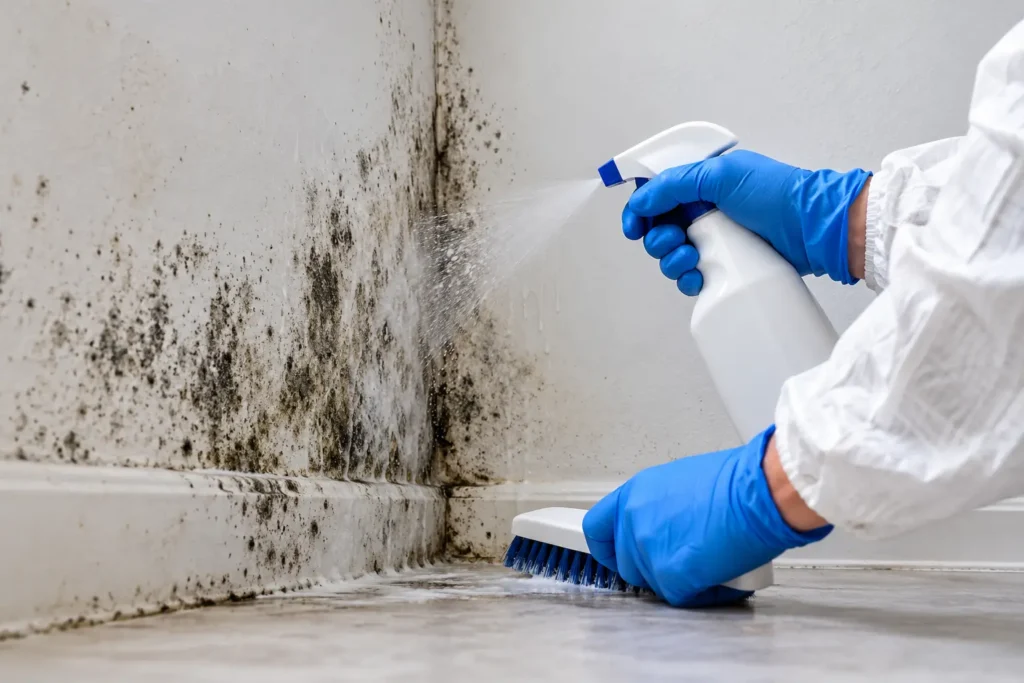
Dealing with mildew on your bathroom walls, shower tiles, ceilings, or other surfaces? Whether you’ve noticed dark spots around your bathtub, a persistent mildew smell in your basement, or recurring staining on interior walls, addressing the underlying moisture problem is essential to preventing further damage.
Mildew removal in Winnipeg involves cleaning affected surfaces, identifying moisture sources, and repairing damaged building materials when necessary. While minor surface mildew may sometimes be removed through appropriate household cleaning, recurring or extensive contamination can indicate a larger moisture problem.
Mildew commonly develops in damp environments such as bathrooms, kitchens, basements, laundry rooms, and poorly ventilated areas.
At Assured Builders, we help Winnipeg homeowners, landlords, property managers, and commercial property owners address moisture-related mold and mildew damage and plan appropriate restoration work.
Whether the problem involves mildew-stained drywall, water-damaged ceilings, deteriorated bathroom materials, or moisture behind walls, understanding the cause is the first step toward a lasting solution.
Call Assured Builders at 431-293-0168 to discuss mildew-related property damage and restoration options in Winnipeg.
What Is Mildew?
Mildew is a term commonly used to describe certain types of superficial fungal growth, particularly on damp surfaces.
In everyday use, people often describe flat, powdery, or patchy growth on bathroom tiles, grout, walls, and other surfaces as mildew.
However, mildew and mold are closely related terms, and appearance alone cannot reliably identify the organism.
What Does Mildew Look Like?
Mildew may appear as:
White or grey patches
Dark surface spots
Powdery-looking growth
Discoloration around grout
Staining on damp walls
Patchy deposits on bathroom ceilings
Not every dark or white stain is mildew.
Mineral deposits, soap residue, dirt, and other materials can sometimes resemble microbial growth.
What Causes Mildew?
Mildew develops when suitable materials remain damp under conditions favourable to fungal growth.
Common contributing factors include:
High indoor humidity
Poor bathroom ventilation
Plumbing leaks
Condensation
Water intrusion
Damp fabrics
Moisture behind cabinets
Inadequate drying after flooding
Removing visible staining without correcting the moisture source may allow the problem to return.
Mold vs. Mildew: What’s the Difference?
Homeowners often use the terms mold and mildew interchangeably.
Both are associated with fungal growth, but the word mildew is commonly used to describe relatively superficial growth.
Mold is a broader term that includes many fungal species capable of growing on damp building materials.
| Mildew | Mold |
|---|---|
| Often used to describe surface fungal growth | Broad term for many fungal species |
| Commonly noticed on damp bathroom surfaces | Can affect surfaces and porous materials |
| May appear powdery or patchy | Can appear fuzzy, slimy, powdery, or stained |
| Minor surface growth may be cleanable | Extensive contamination may require remediation |
| Moisture correction is important | Moisture correction is essential |
Appearance alone cannot reliably establish whether growth is limited to the surface or extends into underlying materials.
Professional Mildew Removal Services Winnipeg
The appropriate mildew removal method depends on the affected surface, extent of contamination, and source of moisture.
Minor growth on intact, non-porous materials may require routine cleaning.
However, damaged drywall, insulation, wood-based materials, and other porous products may need further assessment.
Surface Cleaning
Appropriate cleaning methods may be used on suitable hard surfaces.
Moisture Investigation
Recurring mildew often indicates excessive humidity, condensation, or water intrusion.
Material Assessment
Deteriorated or extensively contaminated materials may require removal and replacement.
Moisture Correction
Ventilation improvements, plumbing repairs, or other corrective measures may be necessary.
Restoration
When building materials are damaged, restoration may involve drywall repairs, insulation replacement, flooring repairs, or reconstruction.
Bathroom Mildew Removal Winnipeg
Bathrooms are among the most common locations for mildew growth.
Frequent showers, warm temperatures, and inadequate ventilation can allow moisture to accumulate on walls, ceilings, grout, and sealant.
Common Bathroom Mildew Problems
Mildew on shower tiles
Black spots around bathtub caulking
Staining on grout
Mildew on bathroom ceilings
Growth around windows
Musty odours
Mold-like staining behind bathroom fixtures
How to Prevent Bathroom Mildew
Helpful measures include:
Using an appropriately vented bathroom exhaust fan
Removing excess moisture from shower surfaces
Repairing leaking fixtures
Maintaining suitable indoor humidity
Cleaning bathroom surfaces regularly
Replacing damaged caulking when necessary
Investigating recurring condensation
If mildew repeatedly returns despite cleaning, the source of moisture should be investigated.
Shower Mildew Removal
Shower mildew commonly appears on tile, grout, caulking, and other surfaces exposed to frequent water.
Soap residue and persistent dampness can contribute to conditions that support fungal growth.
Removing Mildew From Shower Tiles
For minor surface growth on intact, non-porous tile, appropriate household cleaning may be sufficient.
Use a product suitable for the surface and follow the manufacturer’s instructions.
Mildew on Shower Grout
Grout can retain moisture and may become stained.
The appropriate cleaning method depends on the grout condition and whether contamination is limited to the surface.
Mildew on Shower Caulking
Discoloured caulking may not return to its original appearance after cleaning.
Where sealant has deteriorated or contamination is embedded, replacement may be necessary.
When Shower Mildew Requires Repairs
Recurring contamination behind tile or damaged waterproofing may require professional investigation.
Surface cleaning cannot correct a leaking shower assembly.
Mildew Removal From Walls
Mildew on interior walls may develop because of condensation, plumbing leaks, or water intrusion.
The appropriate treatment depends on the wall material and extent of damage.
Cleaning Mildew From Painted Walls
Minor surface growth on intact, washable painted surfaces may sometimes be cleaned using an appropriate method.
Avoid saturating drywall with cleaning solutions.
Mildew on Damaged Drywall
Drywall that is soft, swollen, deteriorated, or extensively contaminated may require replacement.
Recurring Mildew on Exterior Walls
Recurring growth on cold exterior walls may indicate condensation caused by inadequate insulation, air leakage, or elevated indoor humidity.
Addressing these conditions is important to preventing repeated staining.
Mildew Removal From Bathroom Ceilings
Bathroom ceilings frequently develop mildew when humid air accumulates and ventilation is inadequate.
Dark spots may appear near showers, above bathtubs, or around ceiling corners.
Why Does Mildew Grow on Ceilings?
Common causes include:
Inadequate exhaust ventilation
Excessive indoor humidity
Condensation on cold surfaces
Roof leaks
Plumbing leaks
Insulation deficiencies
Can Ceiling Mildew Be Cleaned?
Minor surface contamination on intact, washable finishes may sometimes be cleaned.
However, soft drywall, sagging materials, or extensive contamination should be assessed before cleaning or repairs.
When Is Ceiling Replacement Necessary?
Replacement may be required when drywall is extensively contaminated, deteriorated, or damaged by prolonged moisture exposure.
Mildew Removal From Wood
Wood can support fungal growth when moisture remains elevated.
Common locations include basement framing, window trim, attic sheathing, and other damp wooden surfaces.
Can Mildew Be Removed From Wood?
Some surface contamination on structurally sound wood may be addressed using appropriate cleaning and drying methods.
However, the condition of the material must be evaluated.
When Should Wood Be Replaced?
Replacement may be necessary when wood is severely deteriorated, structurally compromised, or cannot be appropriately restored.
Does Bleach Kill Mold on Wood?
Household bleach is not a universal solution for mold-contaminated wood.
Porous materials can be difficult to treat, and applying excessive liquid may introduce additional moisture.
Appropriate cleaning, drying, and material assessment are more important than relying on a single chemical product.
Mildew Removal From Carpet
Carpet and underlay can retain moisture following leaks, flooding, or prolonged humidity exposure.
Can Mildew Be Cleaned From Carpet?
Minor odours or surface contamination may sometimes be addressed depending on the material and conditions.
However, carpet and underlay affected by extensive water damage or established mold growth may require removal.
Why Does Carpet Smell Musty?
A musty smell may indicate:
Trapped moisture
Wet underlay
Water-damaged subflooring
Previous flooding
Poor drying
Microbial growth
Cleaning the carpet surface may not resolve moisture beneath it.
Basement Mildew Removal Winnipeg
Basements are particularly vulnerable to dampness because of their below-ground location.
Foundation seepage, condensation, plumbing leaks, and previous flooding can contribute to recurring mildew.
Signs of Basement Mildew
Persistent musty odours
Dark spots on walls
Damp flooring
Condensation on pipes
Water stains
Staining around baseboards
Moisture behind stored items
Damp finished basement walls
How to Address Basement Mildew
The appropriate response may involve:
Investigating foundation seepage
Correcting plumbing leaks
Managing indoor humidity
Improving drainage
Drying damp materials
Cleaning suitable surfaces
Replacing damaged drywall or insulation
If mold is growing inside finished basement walls, professional remediation may be necessary.
How to Remove Mildew Smell From Your Home
A persistent mildew smell can indicate damp materials or concealed moisture problems.
Using air fresheners or deodorizing products may temporarily mask the odour without correcting its source.
Common Causes of Mildew Odours
Damp carpeting
Wet drywall
Plumbing leaks
Basement seepage
Moisture beneath flooring
Poor ventilation
Water-damaged insulation
Steps to Address Mildew Odours
Identify potential moisture sources.
Check for leaks and water damage.
Improve ventilation where appropriate.
Dry damp materials.
Clean suitable affected surfaces.
Arrange further assessment if the odour persists.
Persistent musty odours should not be ignored simply because visible mold is absent.
Best Mold and Mildew Remover: What Actually Works?
Homeowners often search for the best mold and mildew remover for showers, walls, wood, and other surfaces.
However, no single product is appropriate for every material or contamination problem.
The most effective approach depends on the surface, extent of growth, and moisture conditions.
Commercial Mold and Mildew Cleaners
Products marketed for mold and mildew cleaning may be suitable for certain hard, non-porous surfaces when used according to their labels.
Examples of product categories include:
Bathroom mold and mildew cleaners
Tile and grout cleaners
Household disinfectants
Surface-specific cleaning products
Brands such as Tilex, Clorox, CLR, Lysol, and Astonish offer various cleaning products, but formulations, approved uses, and availability differ.
Always check the specific product label rather than assuming every product is suitable for every surface.
Important Cleaning Safety Precautions
Never mix bleach with ammonia, acids, vinegar, or other cleaners.
Follow product ventilation instructions.
Wear appropriate protective equipment.
Avoid oversaturating porous materials.
Do not use chemicals on surfaces where the manufacturer prohibits them.
Keep children and pets away from cleaning areas until safe according to the label.
For extensive contamination, professional assessment may be more appropriate than repeated chemical treatment.
Does Bleach Remove Mildew Permanently?
Bleach-based cleaners may remove certain surface stains and contamination from suitable hard surfaces when used according to the label.
However, bleach does not repair water damage, correct ventilation problems, or remove contamination embedded inside deteriorated materials.
If mildew repeatedly returns, the underlying moisture source needs attention.
Permanent prevention depends on controlling moisture rather than relying on stronger cleaning chemicals.
Can Vinegar Remove Mildew?
Vinegar is sometimes used as a household cleaning agent for minor surface contamination.
However, it is not suitable for every material and should not be considered a substitute for professional remediation of extensive mold damage.
Never mix vinegar with bleach or bleach-containing cleaning products.
For damaged drywall, insulation, or concealed contamination, surface treatment alone may not be sufficient.
When Should You Hire a Professional for Mildew Removal?
Minor surface mildew on suitable hard materials may sometimes be manageable through routine cleaning.
However, professional assessment may be appropriate when:
Contamination covers a large area
Mildew repeatedly returns
Drywall is deteriorating
Water damage is extensive
Mold is suspected behind walls
Basement flooding has occurred
A persistent musty smell remains unexplained
Insulation or flooring is affected
Structural materials show deterioration
The contamination is difficult to access
Extensive mold-related damage should be addressed using appropriate remediation methods.
Mildew Removal Cost Winnipeg
One of the most common questions property owners ask is: How much does mildew removal cost in Winnipeg?
Costs depend on the affected area, type of surface, moisture damage, cleaning requirements, and whether repairs are necessary.
The following figures are broad Canadian-dollar budgeting estimates, not verified Winnipeg market averages or confirmed Assured Builders quotations.
| Mildew Removal or Restoration Project | Estimated Cost (CAD) |
|---|---|
| Small localized professional cleaning | $150–$400 |
| Bathroom mildew cleaning | $250–$600 |
| Wall or ceiling surface treatment | $300–$800 |
| Localized mold and mildew remediation | $500–$1,500 |
| Mildew damage with drywall repairs | $1,000–$3,500 |
| Extensive moisture damage and reconstruction | $3,500–$10,000+ |
Actual costs may fall outside these ranges.
Factors Affecting Mildew Removal Prices
Affected area: Larger spaces generally require more time and materials.
Surface type: Tile, grout, drywall, wood, and carpet have different treatment requirements.
Moisture damage: Water-damaged materials may require replacement.
Accessibility: Concealed or difficult-to-reach areas can increase the scope of work.
Recurring contamination: Persistent problems may require additional moisture investigation.
Reconstruction: Drywall, insulation, flooring, and finishing work can increase costs.
A property-specific assessment is necessary to determine an accurate scope and quotation.
Can Mildew Damage Drywall and Other Building Materials?
Persistent moisture can deteriorate building materials, regardless of whether the visible fungal growth is described as mildew or mold.
Potential damage includes:
Softened drywall
Damaged paint
Swollen wood-based materials
Deteriorated insulation
Stained ceilings
Warped flooring
Damaged trim
Moisture-related deterioration inside walls
When materials are extensively damaged, cleaning alone may not restore their condition.
Repairs or replacement may be necessary.
How to Prevent Mildew From Coming Back
Long-term mildew prevention depends on controlling moisture and correcting the conditions that support fungal growth.
Improve Ventilation
Use properly vented bathroom and kitchen exhaust systems where appropriate.
Repair Leaks Promptly
Address leaking pipes, faucets, appliances, and roofing components.
Control Indoor Humidity
Monitor indoor humidity and reduce excessive moisture when necessary.
Dry Wet Surfaces
Remove standing water and dry affected materials promptly.
Address Basement Seepage
Investigate foundation moisture and drainage problems.
Maintain Bathrooms
Repair damaged caulking, clean suitable surfaces regularly, and address recurring condensation.
Investigate Recurring Stains
Repeated mildew growth may indicate a concealed moisture problem that requires further assessment.
Why Mildew Problems Occur in Winnipeg Homes
Winnipeg’s seasonal climate can contribute to several moisture-related building conditions.
Winter Condensation
Cold outdoor temperatures can contribute to condensation on poorly insulated windows, walls, and ceilings.
Bathroom Humidity
Frequent showers combined with inadequate ventilation can allow moisture to accumulate.
Spring Snowmelt
Melting snow and groundwater conditions may contribute to basement dampness.
Heavy Rainfall
Water intrusion through foundations, windows, or roofing components can damage interior materials.
Plumbing Failures
Leaking fixtures and pipes can introduce moisture into concealed spaces.
Understanding these conditions is important to preventing recurring mildew and mold damage.
Mildew Removal vs. Mold Remediation
Mildew removal generally refers to cleaning relatively minor surface fungal growth.
Mold remediation is a broader process used when contamination requires specialized cleaning, material removal, containment, or other corrective measures.
When Is Simple Cleaning Enough?
Minor contamination on intact, non-porous surfaces may sometimes be addressed through appropriate cleaning and moisture control.
When Is Mold Remediation Necessary?
Professional remediation may be appropriate when contamination is extensive, concealed, recurring, or associated with significant building material damage.
When Is Restoration Required?
Restoration may be necessary when drywall, insulation, flooring, ceilings, or other materials are damaged and require repair or replacement.
Why Contact Assured Builders for Mildew Damage Restoration in Winnipeg?
Mildew problems sometimes indicate more extensive moisture-related building damage.
Assured Builders helps Winnipeg homeowners, landlords, and commercial property owners evaluate affected materials and plan appropriate restoration work.
Depending on the property, repairs may involve:
Drywall replacement
Ceiling restoration
Insulation repairs
Flooring replacement
Cabinet repairs
Interior reconstruction
Repairs to moisture-damaged building components
Where specialized mold remediation or environmental assessment is required, appropriately qualified professionals should establish the scope before reconstruction begins.
Our focus is on helping property owners address damaged materials and the conditions contributing to moisture problems.
Frequently Asked Questions About Mildew Removal Winnipeg
What is the best way to remove mildew?
The appropriate method depends on the surface and extent of contamination. Minor growth on suitable hard surfaces may be cleaned using an appropriate product, while extensive or concealed contamination may require professional remediation.
Is mildew the same as mold?
Mildew is commonly used to describe certain types of superficial fungal growth. Mold is a broader term. Appearance alone cannot reliably identify the organism.
How much does professional mildew removal cost in Winnipeg?
Small cleaning projects may cost a few hundred dollars, while extensive remediation and restoration can cost several thousand dollars. Actual costs depend on the property and required work.
Can mildew be removed from bathroom walls?
Minor surface contamination on intact, washable finishes may sometimes be cleaned. Damaged drywall or recurring moisture problems may require further investigation.
What removes mildew from shower grout?
A suitable grout cleaner may help with minor surface contamination. Follow the product label and avoid damaging the grout or surrounding materials.
Does bleach permanently remove mildew?
Bleach-based cleaners may be effective on certain suitable surfaces, but they do not correct the moisture conditions that allow mildew to return.
Can vinegar kill mildew?
Vinegar is sometimes used for minor surface cleaning, but it is not appropriate for every material or extensive contamination. Never mix it with bleach.
Can mildew grow on wood?
Yes. Damp wood can support fungal growth. The appropriate treatment depends on the extent of contamination and condition of the material.
Can mildew be removed from carpet?
Some minor issues may be manageable, but extensively contaminated or water-damaged carpet and underlay may require replacement.
Why does my basement smell like mildew?
A musty smell may indicate damp materials, water intrusion, poor ventilation, or concealed microbial growth.
Can mildew return after cleaning?
Yes. Mildew may return if humidity, leaks, condensation, or other moisture problems remain unresolved.
Should I hire a professional for mildew removal?
Professional assessment may be appropriate when contamination is extensive, recurring, concealed, or associated with significant water damage.
Does mildew require laboratory testing?
Not always. Visible surface growth and moisture problems can often be evaluated without laboratory identification.
Can mildew damage drywall?
Persistent moisture and fungal growth can contribute to deterioration of drywall and other susceptible building materials.
Request Mildew Removal and Restoration Assistance in Winnipeg
If you’re dealing with recurring bathroom mildew, dark staining on walls, persistent musty odours, or moisture-damaged building materials, addressing the source of the problem is essential.
Assured Builders helps Winnipeg homeowners, landlords, and property managers evaluate mildew-related building damage and plan appropriate restoration work.
Whether your property requires moisture investigation, mold and mildew remediation planning, drywall replacement, ceiling repairs, or reconstruction following water damage, our team can help you discuss the next steps.
Assured Builders – Mildew Removal & Restoration Winnipeg
Phone: 431-293-0168
Call today to discuss your mildew concerns, confirm available services, and request information about assessment and restoration options.