Bathroom Ceiling Mold Removal Winnipeg – Professional Mold Treatment & Restoration
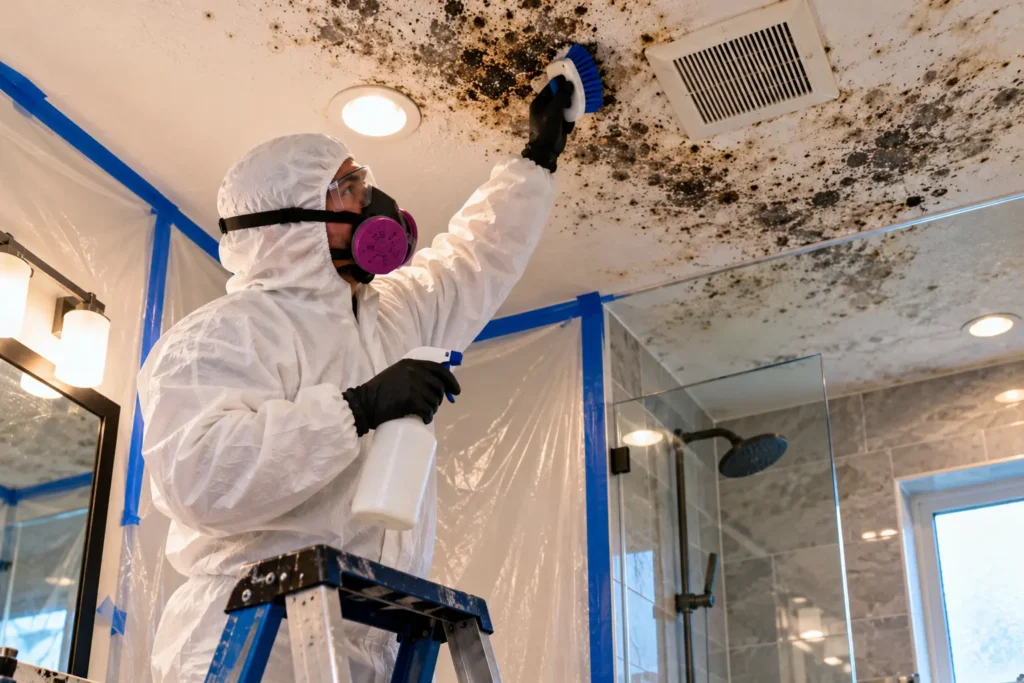
Black spots, dark staining, or recurring mildew on your bathroom ceiling can indicate excessive humidity, condensation, poor ventilation, or concealed water damage. Although small areas of surface mold may sometimes be cleaned, persistent contamination can require professional assessment, mold removal, and repairs to affected building materials.
Assured Builders provides bathroom ceiling mold removal and restoration solutions in Winnipeg, helping homeowners, landlords, and property managers address moisture-related ceiling damage and the conditions that allow mold to develop.
Bathroom ceilings are particularly vulnerable to mold because warm, humid air rises during showers and baths. When this moisture contacts cooler ceiling surfaces, condensation can accumulate and create favourable conditions for microbial growth.
Winnipeg’s freezing winters can make condensation problems more noticeable, especially in bathrooms with inadequate exhaust ventilation, poorly insulated ceiling assemblies, or air leaks near attic spaces.
Whether you’re dealing with black mold above your shower, peeling ceiling paint, or recurring discoloration after cleaning, identifying the underlying cause is essential.
Call Assured Builders at 431-293-0168 to discuss bathroom ceiling mold removal in Winnipeg and request an assessment.
What Causes Mold on Bathroom Ceilings?
Mold develops when moisture remains on susceptible surfaces long enough to support growth.
In bathrooms, condensation is one of the most common sources of moisture. Hot showers release water vapour into the air, increasing indoor humidity. If this moisture is not adequately removed, it may condense on cooler ceiling surfaces.
Over time, repeated condensation can affect painted drywall, plaster, ceiling joints, and other materials.
Common Causes of Bathroom Ceiling Mold
Several conditions can contribute to mold growth:
Inadequate bathroom exhaust ventilation
Excessive humidity from showers and baths
Poorly insulated ceiling assemblies
Cold spots caused by missing insulation
Plumbing leaks from an upper floor
Roof leaks above the bathroom
Moisture entering through attic spaces
Damaged or deteriorated ceiling paint
Persistent condensation
Water-damaged drywall
The appropriate solution depends on whether the problem involves surface condensation, a concealed leak, or deterioration within the ceiling assembly.
Cleaning visible mold without correcting the moisture source may allow contamination to return.
Signs You Need Bathroom Ceiling Mold Removal
Bathroom ceiling mold often begins as small dark spots or patches near the shower or bathtub.
As moisture exposure continues, discoloration may spread across painted surfaces or develop around ceiling corners and ventilation fixtures.
Common warning signs include:
Black or grey spots on the ceiling
Recurring mold after cleaning
Peeling or bubbling ceiling paint
Yellow or brown water stains
Soft or sagging drywall
Persistent condensation
Musty odours
Visible growth near the exhaust fan
Mold developing along ceiling corners
Water damage around ceiling fixtures
Not every dark stain is active mold, and some discoloration may result from water damage or other deposits.
An appropriate inspection can help determine whether cleaning, moisture correction, or ceiling repairs are necessary.
Professional Bathroom Ceiling Mold Removal Winnipeg
Professional bathroom ceiling mold remediation involves evaluating the affected materials, identifying moisture sources, and determining the appropriate cleaning or restoration method.
The extent of work depends on the condition of the ceiling and whether contamination is limited to the surface or extends into porous building materials.
1. Bathroom Ceiling Inspection
The first step is examining the ceiling for visible mold, staining, deterioration, and signs of moisture intrusion.
An assessment may include reviewing:
Ceiling drywall or plaster
Painted surfaces
Exhaust fan operation
Ventilation duct connections
Insulation above the bathroom
Plumbing or roof leaks
Condensation patterns
Signs of concealed water damage
This helps determine whether the problem is primarily caused by humidity or another source of moisture.
2. Identifying the Moisture Source
Long-term mold control requires addressing the conditions responsible for growth.
Possible corrective measures include repairing plumbing leaks, improving bathroom ventilation, correcting insulation deficiencies, or addressing roof-related water intrusion.
3. Mold Cleaning or Material Removal
Minor surface contamination on intact, washable finishes may sometimes be cleaned using appropriate methods.
However, heavily contaminated or deteriorated drywall may require removal and replacement.
4. Drying and Moisture Correction
Affected materials should be adequately dried before repairs or repainting.
5. Bathroom Ceiling Restoration
Once remediation requirements have been addressed, restoration may include drywall repairs, joint finishing, priming, painting, insulation improvements, or ventilation-related repairs.
How to Remove Mold From a Bathroom Ceiling
Many homeowners search for the best way to remove mold from a bathroom ceiling without damaging the paint or drywall.
The correct approach depends on the amount of mold, surface condition, and whether moisture damage is present.
For small areas on intact, washable surfaces, careful cleaning may be appropriate.
However, mold affecting porous or deteriorated ceiling materials may require professional remediation.
Step 1: Assess the Affected Area
Before cleaning, determine whether the mold is localized or widespread.
Check for peeling paint, soft drywall, water stains, or other signs of damage.
If the ceiling is deteriorating or the contamination is extensive, avoid disturbing the material and arrange an assessment.
Step 2: Identify the Cause
Look for excessive condensation, poor ventilation, plumbing leaks, or roof-related moisture.
Cleaning alone will not prevent mold from returning if the moisture source remains unresolved.
Step 3: Use an Appropriate Cleaning Method
For a small area on a suitable, intact surface, use a cleaning product compatible with the ceiling finish and follow the manufacturer’s instructions.
Avoid soaking drywall or using excessive liquid, which can introduce additional moisture.
Do not mix cleaning chemicals.
Step 4: Dry the Area
After cleaning, ensure the surface dries adequately.
Improving ventilation and controlling humidity can help reduce recurring condensation.
Step 5: Monitor for Recurrence
If mold returns repeatedly, the ceiling may have a concealed moisture problem or require repairs.
The best way to get rid of mold on a bathroom ceiling is to address both the contamination and the moisture conditions that caused it.
How to Permanently Remove Mold From a Bathroom Ceiling
Homeowners often ask how to permanently remove mold from bathroom ceiling surfaces.
While proper remediation can address existing contamination, no cleaning product or treatment can guarantee that mold will never return.
Mold spores are naturally present in indoor and outdoor environments. New growth can develop whenever susceptible materials remain damp.
Long-term prevention depends on controlling moisture.
Address Bathroom Humidity
Use an appropriately sized exhaust fan and allow it to run during and after showers.
Correct Ventilation Problems
Ensure the bathroom exhaust fan discharges outdoors rather than into an attic or concealed ceiling cavity.
Repair Leaks
Plumbing and roof leaks should be corrected promptly.
Improve Insulation Where Necessary
Cold ceiling surfaces can contribute to condensation. Missing or poorly installed insulation may require correction.
Replace Damaged Materials
If drywall has deteriorated or become extensively contaminated, replacement may be more appropriate than repeated cleaning.
These measures can significantly reduce the likelihood of recurring bathroom ceiling mold.
Black Mold on Bathroom Ceilings
Black mold on bathroom ceilings commonly appears as dark spots, patches, or staining around shower areas and ceiling corners.
However, mold colour alone cannot reliably identify the species.
Many different molds can appear dark, and not every black stain represents active mold growth.
Is Black Mold on a Bathroom Ceiling Dangerous?
Exposure to damp and moldy environments may contribute to respiratory symptoms, allergies, or asthma-related problems in susceptible individuals.
Health effects vary depending on exposure conditions and individual sensitivity.
Visible mold should be addressed appropriately regardless of its colour.
Black Mold Ceiling Removal
The appropriate removal method depends on whether contamination is limited to the painted surface or has affected the underlying drywall.
Where mold has penetrated porous materials or extensive water damage is present, material removal may be necessary.
Simply painting over black mold does not resolve contamination or the moisture problem.
Mold on Shower Ceilings
Mold on shower ceilings is particularly common because these surfaces experience frequent exposure to warm, humid air.
Bathrooms with enclosed shower stalls or low ceilings may experience concentrated moisture around the shower area.
Common Causes of Shower Ceiling Mold
Potential causes include:
Inadequate exhaust ventilation
Persistent condensation
Poor airflow above the shower
Cold ceiling surfaces
Water intrusion from above
Deteriorated ceiling finishes
How to Remove Mold From a Shower Ceiling
For minor contamination on intact, washable surfaces, appropriate cleaning and improved ventilation may be sufficient.
However, recurring mold or damaged drywall may indicate that moisture has affected the ceiling assembly.
A professional assessment can help determine whether cleaning, drywall replacement, or additional repairs are necessary.
Bathroom Ceiling Mildew Removal
Mildew is a commonly used term for certain types of superficial fungal growth.
In bathrooms, mildew-like staining may develop on painted ceilings when moisture accumulates repeatedly.
Although some minor surface growth can be cleaned, recurring mildew may indicate excessive humidity or inadequate ventilation.
How to Remove Mildew From a Bathroom Ceiling
The appropriate method depends on the ceiling material and condition.
Small areas on suitable washable surfaces may be cleaned using compatible products.
However, porous, deteriorated, or extensively contaminated materials may require professional attention.
To reduce recurrence, focus on moisture control, ventilation, and repairing damaged finishes.
Best Mold Remover for Bathroom Ceilings
There is no single bathroom ceiling mold cleaner that is appropriate for every surface or contamination problem.
Some products are designed for non-porous bathroom surfaces such as tile and glass, while others may be suitable for specific painted finishes.
Using the wrong cleaner can damage paint, discolor surfaces, or introduce unnecessary moisture.
Choosing a Bathroom Ceiling Mold Cleaner
Before using a product, consider:
Whether the ceiling surface is washable
Whether the paint is intact
The manufacturer’s cleaning recommendations
The size of the affected area
Whether the drywall is moisture-damaged
Whether adequate ventilation is available
Avoid using excessive amounts of liquid on drywall.
Do not mix bleach with ammonia, vinegar, or other cleaning products because dangerous gases can form.
A mold spray for bathroom ceiling surfaces may help with minor surface cleaning, but it cannot repair damaged drywall or correct concealed moisture problems.
Bathroom Ceiling Mold Removal Cost in Winnipeg
One of the most common questions homeowners ask is: How much does bathroom ceiling mold removal cost in Winnipeg?
The cost depends on the size of the affected area, contamination severity, ceiling condition, accessibility, and whether repairs are necessary.
The following amounts are broad Canadian-dollar budgeting estimates, not verified local averages or fixed Assured Builders quotations.
| Bathroom Ceiling Mold Project | Estimated Cost (CAD) |
|---|---|
| Small localized remediation | $300–$800 |
| Moderate ceiling mold remediation | $500–$1,500 |
| Mold removal with drywall repairs | $1,000–$2,500 |
| Extensive ceiling damage and replacement | $2,000–$4,500+ |
| Major moisture damage with additional restoration | $4,500+ |
Actual costs may fall outside these ranges.
What Affects Bathroom Ceiling Mold Removal Cost?
Size of the affected area: Larger contaminated surfaces generally require more labour.
Ceiling material: Cleaning intact painted surfaces differs from removing damaged drywall.
Moisture damage: Water-damaged insulation or framing may require additional repairs.
Accessibility: High ceilings or difficult-to-reach areas can increase labour requirements.
Ventilation repairs: Exhaust fan installation or duct corrections may add to the project cost.
Reconstruction: Drywall replacement, finishing, priming, and painting can increase the total.
A property-specific assessment is the most reliable way to determine the required scope and cost.
Bathroom Ceiling Mold vs. Water Stains
Not every ceiling stain is mold.
Yellow or brown discoloration may result from plumbing leaks, roof leaks, or previous water intrusion.
Dark staining may also have causes unrelated to active mold growth.
However, water-damaged materials can create conditions favourable to mold development.
Signs of Possible Water Damage
Warning signs include:
Brown or yellow ceiling stains
Bubbling paint
Soft drywall
Sagging ceiling sections
Damp insulation
Recurring discoloration after rainfall
Moisture around plumbing fixtures
If the ceiling shows signs of structural deterioration or active leakage, repairs should be prioritized before cosmetic treatment.
Why Bathroom Ceiling Mold Is Common in Winnipeg
Winnipeg’s climate can contribute to bathroom ceiling condensation, particularly during winter.
When warm, humid bathroom air contacts cold ceiling surfaces, moisture may accumulate.
This can be more noticeable in bathrooms located directly beneath unheated attics or near poorly insulated exterior walls.
Older homes may also have inadequate exhaust ventilation or air leaks that allow humid air to enter concealed spaces.
Winter Condensation Problems
During freezing weather, temperature differences between indoor and outdoor spaces can increase the potential for condensation.
Poor insulation, inadequate air sealing, and ineffective ventilation may contribute to recurring moisture problems.
Attic Moisture Problems
If a bathroom exhaust fan discharges into an attic rather than outdoors, humid air can accumulate near roof sheathing and insulation.
This may contribute to attic condensation and mold growth.
Correcting exhaust duct connections can help protect both the bathroom ceiling and attic structure.
Bathroom Exhaust Fans and Mold Prevention
A properly functioning bathroom exhaust fan helps remove humid air generated by showers and baths.
However, the fan must be appropriately sized, installed, and vented outdoors.
Signs of Poor Bathroom Ventilation
Potential warning signs include:
Mirrors remaining fogged for extended periods
Condensation on ceilings
Persistent humidity
Recurring mold
Musty odours
Peeling ceiling paint
Improving ventilation may involve repairing an existing fan, correcting duct connections, or installing a more suitable exhaust system.
The appropriate solution depends on the bathroom’s size and construction.
Can You Paint Over Bathroom Ceiling Mold?
Painting over mold is not a substitute for remediation.
Even if the new paint temporarily conceals discoloration, contamination and moisture conditions may remain.
Before repainting, affected surfaces should be properly evaluated and cleaned or replaced as appropriate.
When Is Repainting Appropriate?
Repainting may be suitable after:
Existing contamination has been addressed
Moisture sources have been corrected
Damaged materials have been repaired or replaced
The ceiling has dried adequately
Surface preparation has been completed
A bathroom-appropriate paint system may improve durability, but paint alone cannot prevent mold when excessive moisture remains.
When Should Bathroom Ceiling Drywall Be Replaced?
Not all ceiling mold requires drywall replacement.
Minor surface contamination on structurally sound, washable finishes may sometimes be addressed through cleaning.
However, replacement may be appropriate when:
Drywall is soft or sagging
Water damage is extensive
Mold has affected porous materials
Contamination is widespread
The ceiling has deteriorated
Concealed moisture damage is present
The condition of the material should determine whether cleaning or replacement is appropriate.
Professional Bathroom Ceiling Mold Removal vs. DIY Cleaning
Small, accessible areas of surface contamination may sometimes be manageable through appropriate household cleaning.
However, professional assessment is advisable when mold repeatedly returns, affects a large area, or is associated with damaged drywall.
Bathroom ceilings also present practical safety concerns because cleaning often requires overhead work and access equipment.
Avoid standing on unstable furniture or disturbing damaged ceiling materials.
Where contamination extends into concealed cavities or insulation, a more comprehensive remediation approach may be necessary.
How to Prevent Mold on Bathroom Ceilings
Long-term prevention focuses on reducing moisture and maintaining bathroom surfaces.
Homeowners can help prevent recurring mold by:
Using exhaust ventilation during showers
Allowing the fan to continue operating after bathing
Ensuring exhaust ducts terminate outdoors
Repairing plumbing leaks promptly
Maintaining appropriate indoor humidity
Investigating ceiling condensation
Repairing damaged paint and drywall
Correcting insulation deficiencies
Cleaning minor surface deposits regularly
Addressing water stains before deterioration progresses
If mold returns despite these measures, further investigation may be necessary.
Why Choose Assured Builders for Bathroom Ceiling Restoration in Winnipeg?
Bathroom ceiling mold problems often involve more than cleaning visible staining.
Moisture-damaged ceilings may require drywall replacement, insulation repairs, ventilation improvements, painting, or restoration following plumbing and roof leaks.
Assured Builders helps Winnipeg property owners assess bathroom ceiling restoration needs and understand the repairs required to address affected building materials.
Depending on the condition of the property, work may involve removing damaged finishes, repairing drywall, correcting moisture-related defects, and restoring the ceiling after appropriate remediation.
Where specialized environmental assessment or mold remediation is necessary, the appropriate scope should be established before reconstruction begins.
Our focus is on practical restoration solutions that address both visible damage and the conditions contributing to recurring moisture problems.
Frequently Asked Questions About Bathroom Ceiling Mold Removal
How do I remove mold from my bathroom ceiling?
For small areas on intact, washable surfaces, use a suitable cleaning product according to its instructions and address the moisture source. Extensive contamination or damaged drywall may require professional remediation.
What is the best way to remove mold from a bathroom ceiling?
The best approach is to evaluate the affected material, remove contamination appropriately, and correct condensation, ventilation, or water intrusion problems.
How can I permanently get rid of mold on my bathroom ceiling?
No treatment can guarantee mold will never return. Long-term prevention depends on moisture control, adequate ventilation, leak repairs, and replacement of damaged materials where necessary.
Is black mold on a bathroom ceiling dangerous?
Exposure to damp and moldy environments may cause symptoms in susceptible individuals. Mold colour alone does not determine its species or health risk.
Can I use bleach to clean bathroom ceiling mold?
Bleach is not suitable for every surface and does not correct underlying moisture problems. Follow product instructions, avoid mixing chemicals, and do not rely on bleach to remediate contaminated porous materials.
Why does mold keep coming back on my bathroom ceiling?
Recurring mold commonly indicates persistent humidity, condensation, inadequate ventilation, concealed leaks, or other unresolved moisture conditions.
Should I replace drywall with mold on it?
Replacement may be necessary when drywall is heavily contaminated, water-damaged, soft, or deteriorating. Minor surface contamination on intact finishes may not require replacement.
How much does bathroom ceiling mold removal cost in Winnipeg?
Small localized projects may cost a few hundred dollars, while larger remediation projects involving drywall repairs or replacement can cost several thousand dollars. A property-specific assessment is required for accurate pricing.
Can bathroom ceiling mold spread into the attic?
Moisture problems can affect both bathroom ceilings and attic spaces, particularly when humid air leaks through ceiling openings or exhaust ducts discharge into the attic. The extent of any contamination requires inspection.
Does mold-resistant paint prevent bathroom ceiling mold?
Mold-resistant paint may help protect suitable surfaces, but it does not replace proper ventilation, moisture control, or remediation of existing contamination.
Request Bathroom Ceiling Mold Removal in Winnipeg
If you’ve noticed black spots above your shower, recurring mold on your bathroom ceiling, peeling paint, or moisture-damaged drywall, addressing the problem early can help prevent further deterioration.
Assured Builders provides bathroom ceiling mold-related restoration solutions in Winnipeg, helping homeowners, landlords, and property managers evaluate damaged building materials and plan appropriate repairs.
Whether your bathroom requires moisture investigation, ceiling mold remediation planning, drywall replacement, ventilation improvements, or restoration following water damage, our team can help you discuss the next steps.
Assured Builders – Bathroom Ceiling Mold Removal Winnipeg
Phone: 431-293-0168
Call today to request an assessment and discuss your bathroom ceiling mold removal and restoration needs.