Kitchen Mold Removal Winnipeg – Professional Mold Remediation & Water Damage Restoration
Kitchen Mold Removal Winnipeg – Professional Mold Remediation & Water Damage Restoration
Mold in your kitchen can develop in places you rarely inspect, including beneath sinks, behind cabinets, around dishwashers, and inside walls affected by plumbing leaks. Whether you’ve discovered black mold under your kitchen sink, noticed a persistent musty smell inside your cabinets, or found moisture damage behind your dishwasher, addressing the problem early can help prevent further deterioration.
Assured Builders provides kitchen mold removal and restoration solutions in Winnipeg, helping homeowners, landlords, and property managers address moisture-damaged building materials, mold contamination, and the conditions that allow mold to develop.
Kitchens contain several potential moisture sources, including water supply lines, drain connections, dishwashers, refrigerators, and sinks. Even a small plumbing leak can remain hidden behind cabinets for weeks or months, allowing moisture to accumulate in wood, drywall, insulation, and flooring.
While minor surface mold on suitable materials may sometimes be cleaned, extensive contamination or water-damaged cabinetry often requires professional assessment and restoration.
Effective kitchen mold remediation involves more than removing visible stains. It requires identifying the moisture source, evaluating affected materials, addressing contamination, and repairing damage where necessary.
Call Assured Builders at 431-293-0168 to discuss kitchen mold removal in Winnipeg and request an assessment.
What Causes Mold in Kitchens?
Mold develops when moisture remains on susceptible surfaces long enough to support microbial growth.
Kitchens are particularly vulnerable because plumbing fixtures and appliances can leak into enclosed spaces with limited airflow.
Wood-based cabinets, drywall, subflooring, and other porous materials may become contaminated when exposed to prolonged dampness.
Common Causes of Kitchen Mold
Several conditions can contribute to mold growth:
Leaking kitchen sink drain connections
Damaged water supply lines
Dishwasher leaks
Refrigerator water line leaks
Condensation around cold plumbing pipes
Water entering behind backsplashes
Poorly sealed countertops
Moisture trapped beneath cabinets
Previous flooding or water damage
Inadequate drying after plumbing failures
Identifying the underlying cause is essential because mold can return if moisture problems remain unresolved.
Signs You Need Professional Kitchen Mold Removal
Kitchen mold is not always visible.
Contamination may develop behind cabinets, beneath flooring, or inside wall cavities before homeowners notice a problem.
Common warning signs include:
Black or dark staining beneath the kitchen sink
Musty odours inside cabinets
Swollen or deteriorating cabinet panels
Peeling laminate or damaged finishes
Soft flooring near appliances
Water stains around plumbing connections
Mold around dishwasher openings
Recurring moisture beneath the sink
Discoloration along kitchen baseboards
Visible mold on drywall behind cabinets
A musty smell does not automatically confirm mold, but it may indicate moisture conditions that warrant further investigation.
Professional assessment can help determine whether the problem involves surface contamination, concealed water damage, or deteriorated building materials.
Professional Kitchen Mold Removal Services Winnipeg
Kitchen mold remediation involves evaluating affected materials, identifying moisture sources, and selecting appropriate cleaning or restoration methods.
The scope of work depends on the size of the affected area and whether contamination has spread into cabinetry, drywall, insulation, or flooring.
Kitchen Mold Inspection
An assessment may include examining:
Kitchen sink cabinets
Plumbing supply and drain connections
Dishwasher openings
Refrigerator water connections
Cabinet backing and shelving
Drywall behind kitchen fixtures
Flooring and subflooring
Baseboards and adjacent walls
The findings help establish whether localized cleaning, material replacement, or more extensive restoration is necessary.
Moisture Source Identification
Leaks and other sources of moisture should be corrected before completing restoration.
Mold Cleaning and Removal
Suitable, structurally sound surfaces may sometimes be cleaned using appropriate remediation methods.
However, heavily contaminated porous materials or deteriorated cabinetry may require removal and replacement.
Drying and Restoration
Affected areas should be adequately dried before new materials are installed.
Restoration may involve replacing damaged drywall, cabinet components, insulation, flooring, or other construction materials.
Kitchen Sink Mold Removal Winnipeg
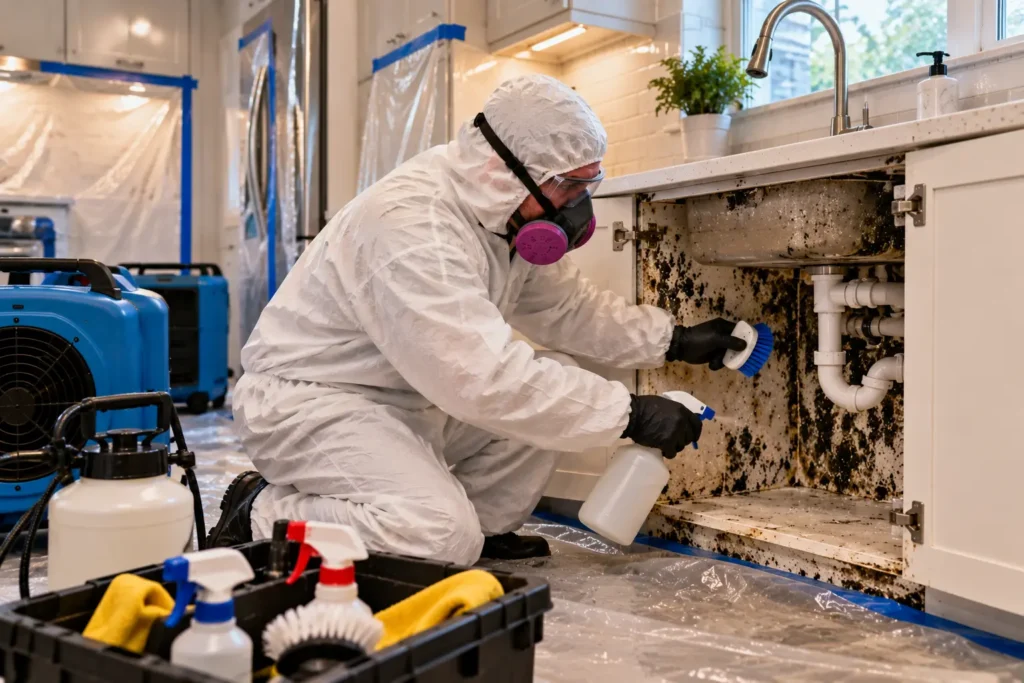
Mold beneath kitchen sinks is one of the most common kitchen moisture problems.
Sink cabinets contain water supply lines, drain connections, and plumbing penetrations that can develop leaks over time.
Even a slow drip may introduce enough moisture to damage the cabinet base or surrounding drywall.
Why Mold Develops Under Kitchen Sinks
Common causes include:
Loose drain connections
Leaking supply valves
Damaged flexible hoses
Condensation on pipes
Water entering around the sink rim
Spills that remain trapped beneath stored items
Poor airflow inside enclosed cabinets
Wood-based cabinet panels can absorb moisture and swell, creating conditions favourable to mold growth.
Mold Removal Under Kitchen Sink Cabinets
The appropriate treatment depends on the extent of contamination and condition of the cabinet.
Minor surface contamination on intact, suitable materials may sometimes be cleaned after the moisture source has been corrected.
However, cabinet panels that are swollen, deteriorated, or heavily contaminated may require replacement.
If water has reached the drywall or flooring beneath the cabinet, additional restoration may be necessary.
Cleaning Mold Under the Sink
Homeowners often discover mold while removing cleaning supplies or stored items from beneath the kitchen sink.
Before attempting cleanup, check for active leaks, wet materials, and visible deterioration.
When Can Mold Be Cleaned?
Small amounts of surface contamination on suitable, intact materials may sometimes be cleaned using appropriate products and precautions.
The area should be dried thoroughly, and the moisture source must be corrected.
When Is Professional Removal Necessary?
Professional assessment is advisable when:
Mold covers a large area
Cabinet panels are swollen or soft
Water has entered the wall cavity
Flooring beneath the cabinet is damaged
Mold repeatedly returns
Plumbing leaks have caused extensive damage
Contamination extends behind fixed cabinetry
Simply wiping away visible mold may not resolve contamination inside porous materials.
Black Mold Under Kitchen Sinks
Black mold under a kitchen sink often appears as dark patches on cabinet panels, drywall, or surrounding wood.
However, mold colour alone cannot reliably identify the species.
Different types of mold can appear black or dark, and not every black stain is active mold growth.
Is Black Mold Under the Sink Dangerous?
Exposure to damp and moldy environments may contribute to respiratory symptoms, allergies, or asthma-related problems in susceptible individuals.
The potential effects depend on exposure conditions and individual sensitivity.
Visible mold should be addressed appropriately regardless of its colour.
Black Mold Removal Under Kitchen Cabinets
Remediation may involve cleaning salvageable surfaces, removing deteriorated cabinet components, repairing plumbing leaks, and restoring damaged walls or flooring.
Where contamination extends into concealed spaces, additional investigation may be required.
Dishwasher Mold Removal Winnipeg
Dishwashers can contribute to kitchen mold problems when moisture accumulates around appliance seals, drain connections, supply lines, or surrounding cabinetry.
Mold may develop inside the dishwasher itself or in the building materials surrounding the appliance.
These situations require different approaches.
Mold Inside a Dishwasher
Mold or mildew-like deposits can develop on dishwasher door gaskets, filters, and other areas where food residue and moisture accumulate.
Routine cleaning and maintenance may help address minor contamination inside the appliance.
Mold Behind or Beneath a Dishwasher
Water leaks from dishwasher hoses, drain connections, or internal components can damage nearby cabinets, drywall, and subflooring.
This type of problem may require professional water damage restoration.
Signs of Dishwasher-Related Mold
Potential warning signs include:
Musty odours near the dishwasher
Water pooling beneath the appliance
Swollen cabinet panels
Soft flooring
Discoloration around adjacent baseboards
Visible mold behind the appliance
Recurring dampness after dishwasher cycles
If a leak is suspected, the appliance should be inspected and repaired before surrounding materials are restored.
How to Clean Mold From a Dishwasher
Cleaning mold from a dishwasher depends on whether the contamination is limited to washable appliance components.
For minor deposits inside the dishwasher:
Consult the appliance manufacturer’s cleaning instructions.
Inspect and clean removable filters where appropriate.
Check the door gasket for residue and moisture.
Use a dishwasher-compatible cleaning product according to its label.
Allow appropriate drying and address any drainage problems.
Avoid mixing cleaning chemicals or using products that are not approved for the appliance.
If the dishwasher is leaking into surrounding cabinetry or flooring, internal appliance cleaning will not resolve the building-related moisture damage.
Mold Behind Kitchen Cabinets
Mold can develop behind cabinets when plumbing leaks, condensation, or water intrusion remain concealed.
Cabinets installed against exterior walls may also be affected by moisture accumulation where airflow is restricted.
Signs of Mold Behind Cabinets
Potential indicators include:
Persistent musty odours
Swollen cabinet backing
Discoloration near cabinet edges
Damp drywall
Peeling paint
Recurring moisture stains
Soft or deteriorating wall materials
These symptoms do not automatically confirm concealed mold, but they may justify further investigation.
How Is Mold Behind Cabinets Removed?
The remediation process may require removing cabinet components, opening affected wall sections, cleaning salvageable materials, and replacing contaminated drywall or insulation.
The exact scope depends on the condition of the materials and extent of moisture damage.
Kitchen Cabinet Mold Removal
Kitchen cabinets are often constructed from plywood, particleboard, MDF, or other wood-based materials.
These materials can absorb moisture when exposed to plumbing leaks or repeated spills.
Can Moldy Kitchen Cabinets Be Saved?
Some structurally sound cabinet surfaces may be cleaned using appropriate methods.
However, heavily contaminated or deteriorated particleboard and MDF may be difficult to restore.
Cabinet replacement may be necessary when:
Panels have swollen significantly
Structural integrity has deteriorated
Moisture damage is extensive
Mold contamination cannot be adequately addressed
The cabinet base has become soft or unstable
A proper assessment can help determine whether repair or replacement is appropriate.
Kitchen Wall Mold Removal
Mold on kitchen walls may develop near sinks, backsplashes, appliances, or concealed plumbing connections.
Painted drywall is particularly vulnerable when water penetrates behind the finish.
Removing Mold From Kitchen Drywall
Minor surface contamination on intact, washable finishes may sometimes be cleaned.
However, water-damaged or heavily contaminated drywall often requires removal and replacement.
If mold is suspected inside the wall cavity, additional investigation may be necessary.
Mold Behind Kitchen Backsplashes
Damaged grout, cracked sealant, or water intrusion around countertops can allow moisture to enter behind backsplash materials.
Repairs may involve removing affected finishes, addressing water damage, and restoring the wall assembly.
Kitchen Mold Removal Cost in Winnipeg
One of the most common questions homeowners ask is: How much does kitchen mold removal cost in Winnipeg?
The cost depends on the size of the affected area, severity of contamination, accessibility, and whether cabinetry or other building materials require replacement.
The following figures are broad Canadian-dollar budgeting estimates, not verified Winnipeg market averages or fixed Assured Builders quotations.
| Kitchen Mold Removal Project | Estimated Cost (CAD) |
|---|---|
| Small localized mold remediation | $300–$800 |
| Under-sink cabinet mold remediation | $500–$1,500 |
| Dishwasher-related mold and moisture restoration | $800–$2,500 |
| Mold removal with cabinet or drywall repairs | $1,500–$4,000 |
| Extensive kitchen mold damage and reconstruction | $4,000–$10,000+ |
Actual costs may fall outside these ranges.
Factors Affecting Kitchen Mold Removal Cost
Affected area: Larger contaminated surfaces generally require more labour and materials.
Cabinet condition: Swollen or deteriorated cabinetry may require replacement.
Concealed damage: Mold behind cabinets or inside walls can require additional demolition.
Plumbing repairs: Leaking pipes, drain connections, or appliance hoses must be corrected.
Flooring damage: Water-damaged subflooring may require repair or replacement.
Reconstruction: Cabinet installation, drywall repairs, painting, and flooring restoration can increase the total.
A property-specific assessment is the most reliable way to determine the required scope and cost.
Kitchen Mold After Water Damage
Water damage is one of the leading causes of kitchen mold problems.
Leaks from sinks, dishwashers, refrigerators, and plumbing connections can introduce moisture into enclosed spaces.
Even after visible water has been removed, drywall, cabinetry, and subflooring may remain damp.
Water Damage Restoration May Include
Identifying and repairing leaks
Removing standing water
Drying affected materials
Removing unsalvageable cabinetry
Addressing contaminated drywall
Repairing subflooring
Replacing insulation
Restoring damaged kitchen finishes
Prompt attention to water damage can help reduce the likelihood of extensive contamination.
Can You Remove Kitchen Mold Yourself?
Small amounts of surface mold on accessible, suitable materials may sometimes be addressed through appropriate household cleaning.
However, professional assessment is advisable when contamination is extensive, concealed, or associated with damaged building materials.
Kitchen mold remediation can also involve plumbing, electrical connections, fixed cabinetry, and difficult-to-access spaces.
Avoid disturbing contaminated materials unnecessarily.
If water damage extends beneath cabinets or inside walls, surface cleaning alone may not resolve the problem.
Best Mold Cleaner for Kitchen Surfaces
Homeowners often search for a kitchen mold cleaner that can remove black mold quickly.
However, no single product is suitable for every surface.
Cleaning methods should be selected based on the material, contamination, and manufacturer’s instructions.
Cleaning Non-Porous Surfaces
Some intact, non-porous surfaces may be cleaned using suitable household products.
Cleaning Wood-Based Cabinets
Wood-based materials require additional care because excessive moisture can cause swelling or deterioration.
Cleaning Drywall
Minor surface contamination on intact painted drywall may sometimes be cleaned carefully, but damaged or heavily contaminated drywall often requires replacement.
Important Cleaning Precautions
Never mix bleach with ammonia, vinegar, or other cleaning chemicals.
Avoid using excessive liquid on porous materials.
Cleaning products cannot repair deteriorated cabinetry or eliminate concealed moisture problems.
How to Prevent Kitchen Mold From Returning
Long-term kitchen mold prevention depends on controlling moisture and maintaining plumbing fixtures.
Homeowners can reduce the likelihood of recurring mold by:
Inspecting plumbing connections beneath sinks
Repairing leaks promptly
Checking dishwasher hoses and connections
Monitoring refrigerator water lines
Drying spills immediately
Maintaining countertop and sink seals
Improving airflow in enclosed cabinets
Investigating musty odours
Repairing water-damaged cabinetry
Addressing recurring condensation
Regular inspections beneath sinks and around appliances can help identify small leaks before extensive damage develops.
Why Kitchen Mold Is Common in Winnipeg Homes
Winnipeg homes can experience moisture problems caused by plumbing failures, condensation, and seasonal temperature changes.
During winter, cold exterior walls and plumbing components may contribute to condensation under certain conditions.
Older kitchens may also contain deteriorated plumbing connections, damaged cabinet materials, or previous water damage.
In finished kitchens, leaks can remain hidden behind cabinets and appliances, allowing moisture to accumulate over time.
Addressing these conditions is essential to preventing recurring mold.
Why Choose Assured Builders for Kitchen Mold Restoration in Winnipeg?
Kitchen mold problems often involve more than cleaning visible staining.
Water-damaged kitchens may require cabinet repairs, drywall replacement, subfloor restoration, insulation replacement, or reconstruction following plumbing leaks.
Assured Builders helps Winnipeg homeowners and property managers evaluate kitchen restoration needs and understand the repairs required to address affected building materials.
Depending on the condition of the property, work may involve removing damaged finishes, replacing cabinetry, restoring drywall, and repairing moisture-related construction damage.
Where specialized environmental assessment or mold remediation is necessary, the appropriate scope should be established before reconstruction begins.
Our focus is on practical restoration solutions that address both damaged materials and the conditions contributing to moisture problems.
Frequently Asked Questions About Kitchen Mold Removal
How do I remove mold from under my kitchen sink?
For minor surface contamination on intact, suitable materials, careful cleaning may be appropriate after repairing leaks. Swollen or heavily contaminated cabinet materials may require replacement.
What causes black mold under kitchen sinks?
Black mold may develop when plumbing leaks, condensation, or trapped moisture affect cabinet panels, drywall, or surrounding materials. Colour alone cannot identify the mold species.
Can mold grow behind kitchen cabinets?
Yes. Mold can develop behind cabinets when moisture enters through plumbing leaks, condensation, or water intrusion.
How do I clean mold from my dishwasher?
Follow the appliance manufacturer’s cleaning instructions, clean accessible filters and seals where appropriate, and use dishwasher-compatible products. Investigate leaks if surrounding cabinets or flooring are damp.
Can a leaking dishwasher cause mold?
Yes. Water leaking beneath or behind a dishwasher can damage cabinetry, drywall, and subflooring, creating conditions favourable to mold growth.
Should moldy kitchen cabinets be replaced?
Replacement depends on the extent of contamination and material damage. Structurally sound surfaces may sometimes be cleaned, while swollen or deteriorated wood-based panels may require replacement.
How much does kitchen mold removal cost in Winnipeg?
Small localized projects may cost a few hundred dollars, while extensive remediation involving cabinet replacement, drywall repairs, and reconstruction can cost several thousand dollars. A property-specific assessment is necessary for accurate pricing.
Can kitchen mold spread into walls?
Yes. Moisture and contamination can affect wall cavities when leaks occur behind sinks, cabinets, or appliances.
Is black mold in the kitchen dangerous?
Exposure to damp and moldy environments may contribute to respiratory symptoms, allergies, or asthma-related problems in susceptible individuals. Mold colour alone does not determine its species or health risk.
How long does kitchen mold remediation take?
Small projects may take one or two working days. Larger projects involving cabinet removal, drying, and reconstruction may require several days or longer.
Request Kitchen Mold Removal in Winnipeg
If you’ve discovered black mold beneath your kitchen sink, recurring musty odours inside cabinets, mold behind your dishwasher, or moisture-damaged walls and flooring, addressing the problem early can help prevent further deterioration.
Assured Builders provides kitchen mold-related restoration solutions in Winnipeg, helping homeowners, landlords, and property managers evaluate affected building materials and plan appropriate repairs.
Whether your kitchen requires moisture investigation, mold remediation planning, cabinet replacement, drywall repairs, or restoration following water damage, our team can help you discuss the next steps.
Assured Builders – Kitchen Mold Removal Winnipeg
Phone: 431-293-0168
Call today to request an assessment and discuss your kitchen mold removal and restoration needs.