
Crawl Space Mold Removal Winnipeg – Professional Mold Remediation & Moisture Control
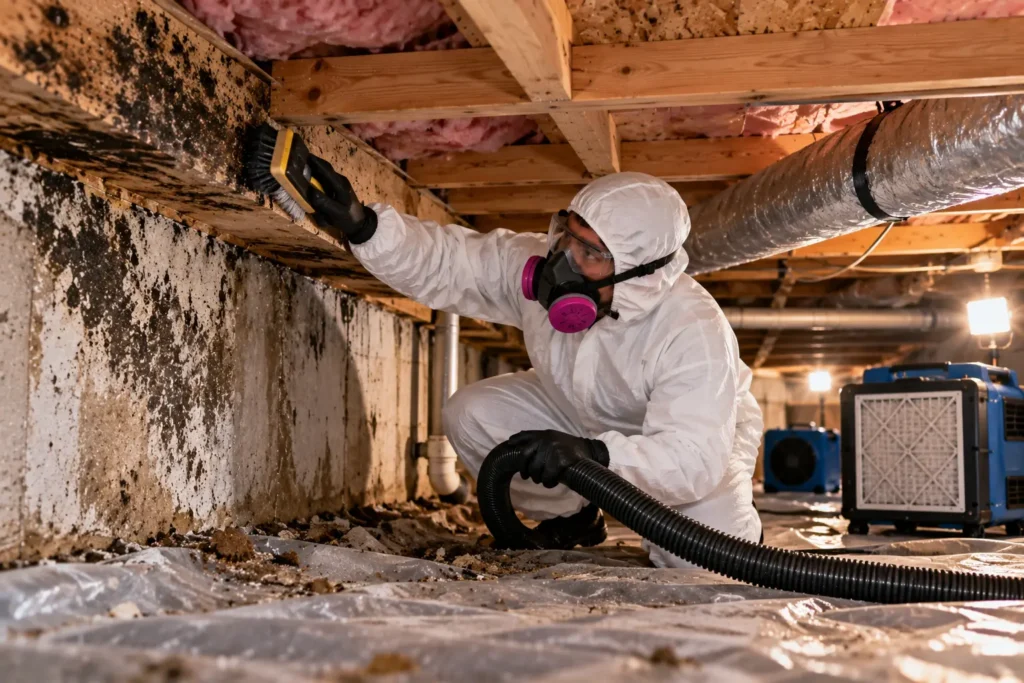
Mold in your crawl space can become a serious concern when moisture accumulates beneath your home. Whether you’ve noticed a persistent musty smell, visible mold on wooden floor joists, damp insulation, or standing water beneath your property, addressing the problem early can help prevent further damage to your home’s structure.
Assured Builders provides crawl space mold removal and restoration solutions in Winnipeg, helping homeowners address moisture-related damage, contaminated building materials, and the conditions that contribute to mold growth.
Crawl spaces are particularly vulnerable to moisture because they are often poorly ventilated, difficult to access, and exposed to ground humidity, foundation seepage, or plumbing leaks. In Manitoba, seasonal snowmelt, heavy rainfall, and fluctuating temperatures can further contribute to moisture accumulation beneath buildings.
Professional crawl space mold remediation involves more than applying a cleaning product to visible mold. Effective treatment requires identifying moisture sources, evaluating affected materials, removing contamination where necessary, and correcting conditions that allow mold to return.
If you’re concerned about mold, mildew, or moisture beneath your home, call Assured Builders at 431-293-0168 to discuss your property and request an assessment.
What Causes Mold in Crawl Spaces?
Mold develops when moisture remains on susceptible building materials long enough to support microbial growth.
Crawl spaces often contain wooden floor joists, subflooring, insulation, and other materials that can become contaminated when exposed to prolonged dampness.
Unlike finished living spaces, crawl spaces may receive little routine attention. Moisture problems can therefore remain undetected until homeowners notice musty odours, deteriorating insulation, or visible damage.
Common Causes of Crawl Space Mold
Several conditions can contribute to mold growth beneath a house:
Ground moisture entering through exposed soil
Foundation cracks and water seepage
Poor exterior drainage
Plumbing leaks beneath the floor
Standing water after heavy rainfall
Inadequate moisture barriers
Condensation on cold surfaces
Improperly installed insulation
Humid outdoor air entering cooler crawl spaces
Previous flooding or sewer backups
Identifying the source of moisture is essential because mold can return if the underlying conditions remain unresolved.
Signs You Need Crawl Space Mold Removal
Crawl space mold is not always visible from inside the house.
Many homeowners first notice an unpleasant smell or signs of moisture around flooring and foundation areas.
Common warning signs include:
Persistent musty odours
Visible black, white, or greenish growth on wood
Damp or sagging insulation
Standing water beneath the house
Water stains on floor joists
Soft or deteriorating wood
Condensation on pipes or structural surfaces
Unusual humidity near the floor
Repeated moisture problems after rainfall
A musty smell does not automatically confirm mold, but it can indicate moisture conditions that warrant further investigation.
Professional assessment can help determine whether the problem involves mold contamination, water intrusion, wood deterioration, or a combination of issues.
Professional Crawl Space Mold Remediation Winnipeg
Crawl space mold remediation involves assessing contamination, addressing affected materials, and correcting moisture conditions.
Because crawl spaces often have limited clearance, exposed electrical components, insulation, and difficult access points, remediation can be more complicated than cleaning mold from an ordinary interior wall.
A properly planned project should consider the condition of the structure as well as the source of moisture.
Crawl Space Inspection
The first step is evaluating the crawl space and identifying visible moisture damage.
An assessment may include examining:
Wooden floor joists
Subflooring
Foundation walls
Plumbing lines
Insulation
Ground conditions
Existing vapour barriers
Drainage and ventilation openings
The findings help establish the extent of damage and determine whether additional investigation or specialized remediation is necessary.
Crawl Space Mold Mitigation
Mold mitigation focuses on reducing the conditions that allow contamination to develop or spread.
This may involve addressing leaks, removing standing water, correcting drainage problems, improving moisture control, or replacing damaged insulation.
Mold Removal and Cleaning
The appropriate cleaning method depends on the affected materials and severity of contamination.
Some structurally sound surfaces may be cleaned using suitable remediation techniques, while heavily contaminated porous materials may require removal.
Containment and dust-control procedures may be necessary to limit the movement of contaminated particles during the work.
Crawl Space Restoration
After remediation and moisture correction, damaged building materials can be repaired or replaced.
Restoration may include insulation replacement, subfloor repairs, joist repairs, moisture-barrier improvements, and other necessary construction work.
Removing Mold From Crawl Space Joists
Wooden floor joists are among the most important structural components found in many crawl spaces.
When moisture accumulates beneath a home, joists can develop surface mold, staining, or deterioration.
Can Mold Be Removed From Wooden Joists?
In some situations, mold on structurally sound wood can be removed using appropriate cleaning methods.
However, the wood should be evaluated for moisture damage before treatment.
Cleaning visible mold does not repair wood that has deteriorated because of prolonged water exposure.
When Do Crawl Space Joists Need Repair?
Structural repairs may be necessary when:
Wood has become soft or deteriorated
Prolonged moisture has caused decay
Floor framing has lost structural integrity
Joists show significant deformation
Connections or supporting components are damaged
Where structural deterioration is suspected, an appropriate qualified professional should evaluate the framing before repairs proceed.
Assured Builders can help homeowners discuss restoration requirements when crawl space moisture has affected building materials.
White Mold in Crawl Space Removal
White mold can develop on wooden framing, subflooring, insulation, and other damp materials.
It may appear as white, powdery, fuzzy, or patchy growth.
However, not every white deposit is mold. Mineral deposits, dust, and other substances can sometimes resemble microbial growth.
An inspection can help determine whether remediation is required.
Is White Mold Dangerous?
Mold colour alone does not establish the species or potential health effects.
Exposure to damp and moldy environments may contribute to respiratory symptoms, allergies, or asthma-related problems in susceptible individuals.
Visible mold should be addressed appropriately regardless of its colour.
White mold in crawl space removal generally follows the same principles as other mold remediation projects: evaluate contamination, correct moisture problems, clean or remove affected materials, and prevent recurrence.
Crawl Space Mold Removal Cost in Winnipeg
One of the most common questions homeowners ask is: How much does crawl space mold removal cost in Winnipeg?
The cost depends on the size of the crawl space, extent of contamination, accessibility, moisture conditions, and required repairs.
The following figures are broad planning estimates in Canadian dollars. They are not verified Winnipeg market averages or fixed Assured Builders quotations.
| Crawl Space Mold Removal Project | Estimated Cost (CAD) |
|---|---|
| Small, localized mold remediation | $500–$1,500 |
| Moderate crawl space mold removal | $1,500–$3,500 |
| Larger crawl space remediation project | $3,500–$6,000+ |
| Extensive contamination and insulation replacement | $6,000–$10,000+ |
| Major remediation with structural restoration | $10,000–$20,000+ |
Actual pricing may fall outside these ranges.
Factors Affecting Crawlspace Mold Remediation Cost
Crawl space size: Larger areas generally require more labour and materials.
Accessibility: Limited clearance and difficult entry points can increase labour requirements.
Contamination severity: Extensive mold growth may require more intensive cleaning or material removal.
Insulation condition: Wet or contaminated insulation may need replacement.
Water intrusion: Drainage corrections, plumbing repairs, and water removal can increase the total project cost.
Structural damage: Deteriorated joists or subflooring may require additional restoration.
Encapsulation: Installing a properly designed crawl space moisture-control system may add a separate expense.
A property-specific assessment is the most reliable way to establish the cost of crawl space mold removal.
Water in Crawl Space Removal
Standing water beneath a home can contribute to mold growth, wood deterioration, and damage to insulation.
Water may enter through foundation openings, plumbing leaks, poor drainage, or seasonal groundwater conditions.
Crawl Space Water Removal Process
Depending on the source and extent of water intrusion, corrective work may involve:
Identifying the water source
Removing standing water
Repairing plumbing leaks
Addressing foundation seepage
Correcting drainage deficiencies
Drying affected materials
Replacing unsalvageable insulation
If water is contaminated by sewage, specialized cleanup procedures and additional safety precautions may be required.
Removing standing water is an important first step, but lasting moisture control also requires addressing the conditions that allowed water to accumulate.
How to Get Rid of Moisture in a Crawl Space
Moisture control is essential for successful crawl space remediation.
Even after visible mold has been removed, damp conditions can allow new growth to develop.
The most appropriate solution depends on the crawl space design, foundation condition, drainage, insulation, and local climate.
Ground Moisture Barriers
Exposed soil can release moisture into the crawl space.
A properly installed ground vapour barrier can help reduce moisture entering from the soil.
Foundation Drainage
Poor grading, damaged downspouts, or inadequate drainage can direct water toward the foundation.
Correcting these problems can help reduce water intrusion.
Plumbing Repairs
Leaks from supply pipes, drains, or other plumbing components should be repaired promptly.
Humidity Management
Some crawl spaces may benefit from controlled dehumidification or other moisture-management measures.
The correct approach depends on whether the crawl space is vented, conditioned, or designed as part of an encapsulated system.
Insulation Improvements
Damaged or improperly installed insulation can contribute to condensation and moisture problems.
Insulation improvements should be coordinated with the crawl space’s air sealing and vapour-control design.
Crawl Space Encapsulation and Mold Remediation
Crawl space encapsulation is a moisture-control approach that generally involves separating the crawl space from ground moisture and uncontrolled outdoor air.
A properly designed encapsulation system may include a durable ground vapour barrier, sealed seams, treatment of foundation walls or penetrations, and suitable humidity management.
However, encapsulation is not appropriate for every crawl space without additional evaluation.
Existing water intrusion, drainage deficiencies, structural deterioration, and contamination should be addressed before an encapsulation system is installed.
Benefits of Crawl Space Encapsulation
When suitable for the building, encapsulation can help:
Reduce ground moisture entry
Improve humidity control
Limit condensation conditions
Protect insulation and structural materials
Reduce the likelihood of recurring moisture-related damage
Mold remediation encapsulation projects should be planned around the building’s specific conditions rather than using a one-size-fits-all approach.
Musty Crawl Space Smell Removal
A persistent musty smell is one of the most common reasons homeowners investigate their crawl spaces.
Odours can develop when moisture accumulates in soil, insulation, wood, or other materials.
Mold may contribute to the smell, but dampness and other contamination can also create unpleasant odours.
How to Eliminate a Musty Smell in a Crawl Space
Effective crawl space musty smell removal starts with identifying the cause.
Potential corrective measures include:
Removing standing water
Repairing plumbing leaks
Cleaning contaminated materials
Removing damaged insulation
Correcting drainage problems
Reducing excessive humidity
Installing appropriate moisture barriers
Air fresheners and deodorizing products may temporarily mask odours without correcting the underlying issue.
If you’re trying to get rid of a musty smell in a crawl space, a moisture assessment is usually more useful than simply applying an odour-control product.
Crawl Space Mold Killer vs. Professional Remediation
Homeowners sometimes search for the best crawl space mold killer or a chemical product that can eliminate contamination quickly.
However, applying a chemical treatment does not automatically resolve a mold problem.
Even when a product affects visible growth, contaminated material and moisture conditions may remain.
Effective remediation focuses on removing contamination using methods appropriate to the surface, correcting moisture sources, and repairing damaged materials.
Some cleaning products are unsuitable for certain building materials or enclosed environments.
Avoid mixing cleaning chemicals, and do not assume that spraying bleach or another product into a crawl space is a substitute for professional remediation.
Can You Remove Crawl Space Mold Yourself?
Small areas of mold on accessible, suitable surfaces may sometimes be addressed by homeowners using appropriate precautions.
However, crawl spaces can present additional hazards, including limited ventilation, exposed electrical components, standing water, sewage contamination, and difficult working conditions.
Disturbing contaminated materials can also release dust and particles.
Professional assessment is advisable when contamination is extensive, concealed, associated with damaged insulation, or located in a difficult-to-access area.
Structural deterioration and contaminated water should be evaluated before attempting cleanup.
Crawl Space Mold After Flooding
Flooding can introduce substantial moisture beneath a home.
Even after standing water has been removed, wood framing, insulation, and other materials may remain damp.
If drying is delayed, conditions can become favourable for mold growth.
Water-related crawlspace remediation may require removing damaged materials, drying the structure, correcting drainage problems, and completing appropriate mold cleanup.
In Winnipeg, spring snowmelt and heavy rainfall can contribute to crawl space moisture problems where foundations or drainage systems are vulnerable.
Prompt investigation can help limit further damage.
Does Homeowners Insurance Cover Crawl Space Mold Removal?
Insurance coverage depends on the policy and the cause of the damage.
Some sudden and accidental water damage events may qualify for coverage, while gradual seepage, condensation, or long-term maintenance issues may be excluded.
Homeowners should contact their insurance provider to confirm whether mold remediation, water removal, structural repairs, or crawl space restoration are covered.
It is also important to understand whether the policy has specific mold-related limits or exclusions.
Why Crawl Space Mold Should Not Be Ignored
Leaving moisture and mold problems unresolved can contribute to further deterioration of building materials.
Potential consequences include:
Continued wood decay
Damage to insulation
Recurring musty odours
Increased repair requirements
Moisture migration into adjacent areas
Reduced durability of structural components
Mold does not automatically mean that a home’s structure is unsafe, but visible deterioration should be evaluated before it progresses.
Addressing the problem early may reduce the amount of restoration required.
Crawl Space Mold Prevention in Winnipeg
Long-term crawl space mold prevention depends on controlling moisture.
Winnipeg homeowners can reduce the likelihood of recurring problems by:
Keeping roof drainage directed away from foundations
Repairing plumbing leaks promptly
Maintaining proper grading around the home
Investigating standing water after heavy rainfall
Inspecting exposed crawl space framing
Addressing damaged insulation
Maintaining appropriate moisture barriers
Monitoring unusual musty odours
Correcting recurring condensation
The correct moisture-control strategy should reflect the building’s foundation design and crawl space conditions.
Why Choose Assured Builders for Crawl Space Restoration in Winnipeg?
Crawl space mold problems can involve several building components, including wooden joists, subflooring, insulation, foundation materials, and plumbing.
Addressing visible contamination without evaluating moisture damage can leave underlying problems unresolved.
Assured Builders helps Winnipeg homeowners assess crawl space restoration needs and understand the repairs required to address affected building materials.
Depending on the property, restoration work may involve insulation replacement, subfloor repairs, moisture-related structural repairs, and other construction improvements.
Where specialized environmental assessment or mold remediation is necessary, the appropriate scope should be established before reconstruction begins.
Our focus is on practical restoration solutions that consider both the condition of the crawl space and the causes of moisture damage.
Frequently Asked Questions About Crawl Space Mold Removal
How much does crawl space mold removal cost in Winnipeg?
Small localized projects may cost approximately $500–$1,500, while moderate or extensive remediation can cost several thousand dollars. Major structural repairs or moisture-control improvements can increase the total substantially. These figures are illustrative budgeting estimates rather than verified local averages.
Is mold in a crawl space dangerous?
Exposure to damp and moldy environments may contribute to respiratory symptoms, allergies, or asthma-related problems in susceptible individuals. The potential risk depends on exposure conditions and individual sensitivity.
Can mold be removed from crawl space joists?
In some situations, mold can be removed from structurally sound wood using appropriate remediation methods. Wood affected by significant decay or structural deterioration may require repair or replacement.
What causes a musty smell in a crawl space?
Musty odours are commonly associated with moisture, damp materials, and sometimes mold growth. Identifying and correcting the moisture source is essential for lasting odour control.
Does crawl space encapsulation remove mold?
No. Encapsulation is primarily a moisture-control measure. Existing contamination should be appropriately addressed before installing an encapsulation system.
How long does crawl space mold remediation take?
Small projects may take one or two working days. Larger projects involving extensive cleaning, water removal, insulation replacement, or structural restoration may require several days or longer.
Can crawl space mold spread into the house?
Air and particles can move between crawl spaces and occupied areas through gaps and other openings. The amount of movement depends on the building’s construction and air-pressure conditions.
Is white mold in a crawl space different from black mold?
Colour alone does not reliably identify mold species or determine health risk. Both light- and dark-coloured contamination should be evaluated based on the extent of growth and moisture conditions.
Will crawl space mold return after cleaning?
Mold can return if ground moisture, plumbing leaks, condensation, or drainage problems remain unresolved.
Do I need to replace insulation after crawl space mold removal?
Insulation replacement depends on its condition. Wet, heavily contaminated, or deteriorated insulation may need removal, while unaffected materials may be retained.
Request Crawl Space Mold Removal in Winnipeg
If you’ve discovered mold beneath your home, noticed a persistent musty smell, or found moisture-damaged insulation and wooden framing, addressing the problem early can help prevent further deterioration.
Assured Builders provides crawl space mold-related restoration solutions in Winnipeg, helping homeowners understand the condition of affected building materials and plan appropriate repairs.
Whether your property requires moisture investigation, crawl space remediation planning, damaged insulation replacement, or structural restoration following mold removal, our team can help you discuss the next steps.
Assured Builders – Crawl Space Mold Removal Winnipeg
Phone: 431-293-0168
Call today to request an assessment and discuss your crawl space mold removal and restoration needs.